
Roseburg School Board Explores Expanding K-12 Virtual Learning Options
The Roseburg School Board discussed expanding K-12 virtual learning Wednesday as 624 students attend online programs outside the district. A potential partnership with Intermountain ESD could offer families more flexibility while keeping students enrolled in Roseburg schools. No decision was made.
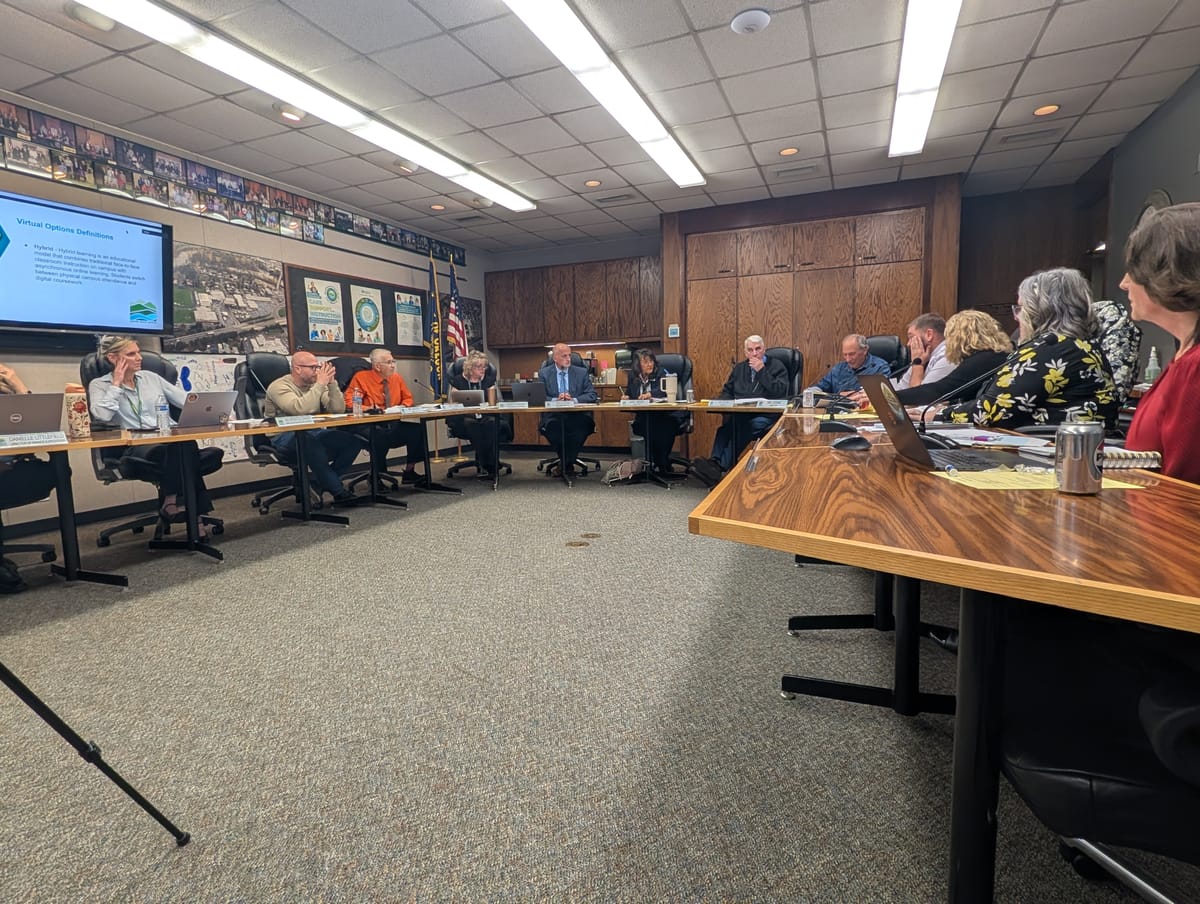
ROSEBURG, Ore. - The Roseburg School Board discussed the possibility of expanding virtual-learning opportunities for students Wednesday night, including a potential partnership with an Oregon educational service district that could allow students to take online classes while remaining enrolled in Roseburg Public Schools.
The discussion came as district officials reported that 624 students are currently attending virtual programs outside the district, with another eight enrollment requests pending.
Board members expressed interest in providing more options for families, improving access to educational programs and keeping students connected to the district. However, they also raised questions about academic performance, costs and whether a new program would attract students back to Roseburg schools.
No decision was made Wednesday. District administrators plan to continue researching the options and return to the board with additional information.
Hundreds of Students Attending Virtual Schools Elsewhere
During the presentation, Assistant Superintendent Michelle Knee reviewed the district's experience with online education and the number of students choosing virtual programs outside Roseburg.
According to information provided during the meeting, 624 students are currently enrolled in outside virtual options, with eight additional requests pending.
Board members discussed the financial implications of those enrollments, noting that the district receives approximately $12,000 in state funding per student, although actual funding amounts can vary.
That prompted discussion about whether Roseburg could provide its own expanded virtual-learning opportunities rather than continuing to lose enrollment to outside programs.
Superintendent Jared Cordon emphasized that the district's interest extends beyond funding..
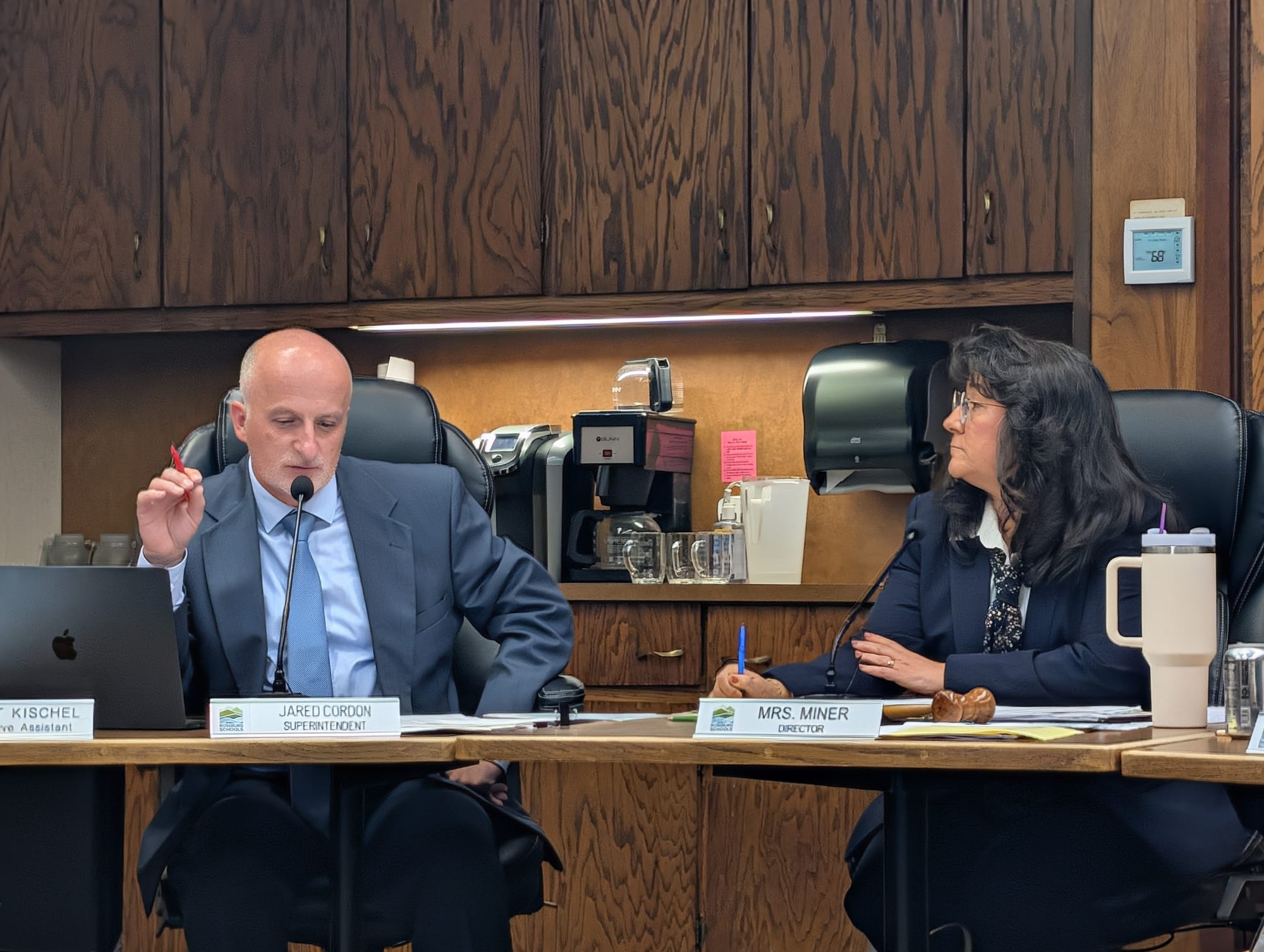
He expressed concern about families moving between virtual programs because their children's educational needs were not being met. Cordon said some families have switched programs several times in a single school year.
He also raised concerns about students missing opportunities available through Roseburg schools, including career and technical education, extracurricular activities and connections with local employers.
The goal, he explained, would be to provide families with an educational experience that offers flexibility without separating students from opportunities within their community.
District Previously Operated Roseburg Virtual School
Roseburg has operated virtual-learning programs before.
During the 2021-22 school year, the district opened Roseburg Virtual School for kindergarten through fifth-grade students. The program initially enrolled 74 students and combined live online instruction, independent coursework and opportunities for in-person activities.
The district expanded the program to serve kindergarten through eighth grade during the 2022-23 school year.
Enrollment reached 90 students that year and 92 students during 2023-24.
By the end of the 2024-25 school year, enrollment had declined to 88 students, and the school board voted to close the program.
Assistant Superintendent Michelle Knee explained that the district could not maintain enough enrollment to make the program financially sustainable. Although students in the program demonstrated academic growth, she said the limited range of available options did not meet every family's needs.
Some students returned to traditional classrooms following the closure, while others transferred to virtual programs elsewhere in Oregon.
The district currently has no kindergarten-through-eighth-grade virtual option.
Roseburg High School continues to offer an asynchronous online program through Edmentum, with 41 students enrolled. The program provides online coursework taught by Oregon-licensed teachers, with support from district learning coaches.
Partnership With Intermountain ESD Under Consideration
One possibility presented Wednesday was a partnership with Intermountain Education Service District's Virtual Learning Academy.
The program offers online instruction for kindergarten through 12th grade using Oregon-licensed teachers.
Under the arrangement discussed, students would remain enrolled in Roseburg Public Schools while receiving some or all of their instruction through the academy.
The district would continue receiving state enrollment funding and would pay Intermountain for the services provided.
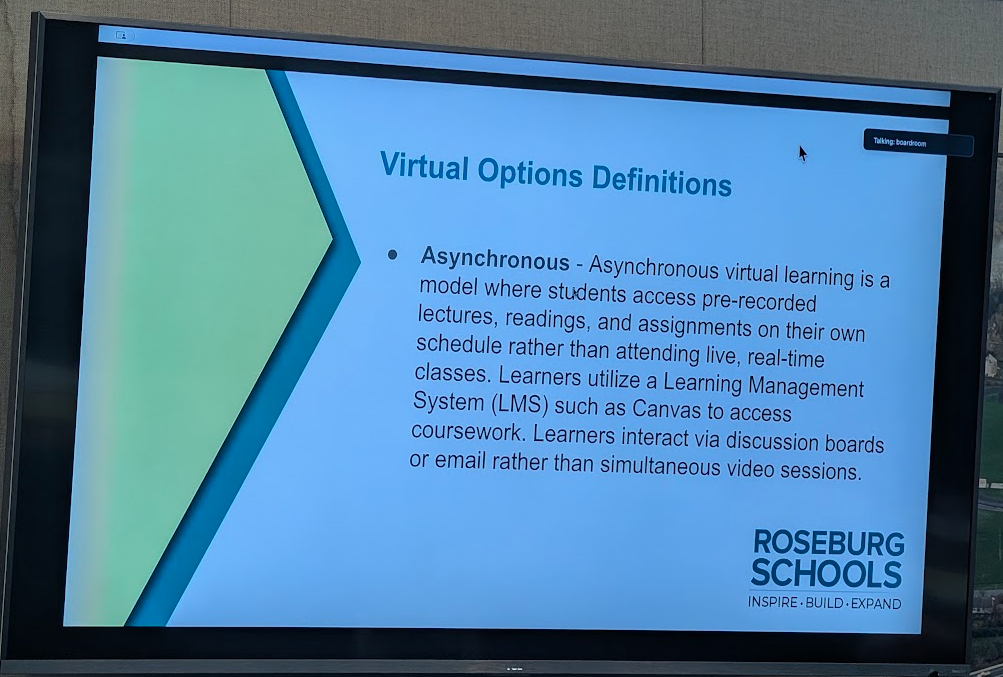
Two primary learning formats were discussed:
- Asynchronous learning: Students complete online coursework independently, without attending scheduled live classes.
- Hybrid learning: Students combine online coursework with in-person classes or activities at district schools.
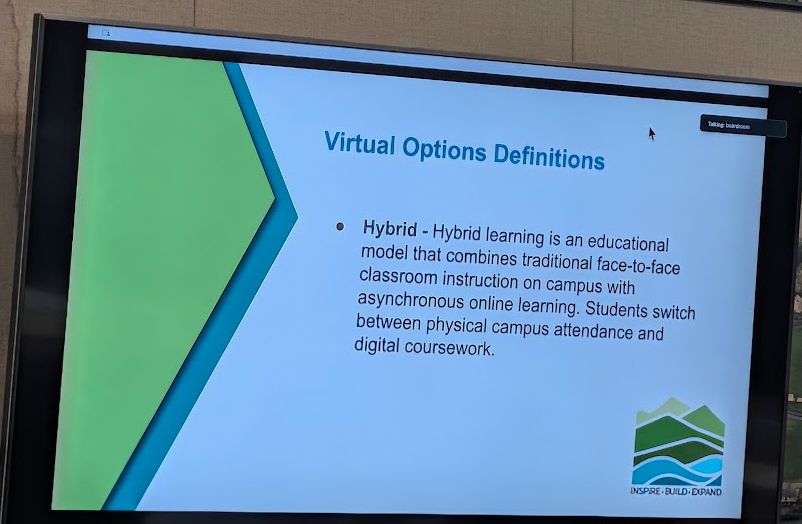
For example, an elementary student participating in a hybrid program could take core academic classes online while attending physical education and music classes in person.
Middle and high school students could potentially combine online coursework with traditional classes, depending on their individual schedules and educational needs.
Students would also remain eligible to participate in Roseburg school extracurricular activities.
The district would retain responsibility for student support services, including special education, English-language development, counseling and state assessments.
Roseburg employees would also serve as liaisons to monitor students' progress and maintain communication with families.
Knee said Intermountain had indicated during an earlier conversation that it could establish a program for Roseburg within approximately three weeks. However, implementing the program locally would require additional planning.
What Would the Program Cost?
District officials outlined preliminary costs associated with the Intermountain program.
A student enrolled full time for an entire school year would cost the district approximately $4,900, regardless of grade level.
For students taking individual online courses through a hybrid arrangement, the cost would be approximately $350 per course per semester.
Unlike the district's existing Edmentum arrangement, which requires Roseburg to purchase an estimated number of student placements in advance, Intermountain would bill the district after students enrolled.
That arrangement could provide greater flexibility as enrollment changes.
However, Cordon cautioned that an expanded virtual program would not necessarily save money.
Students already attending Roseburg schools might choose to take some classes online instead, potentially creating additional expenses without increasing district enrollment.
Administrators would need to consider staffing, scheduling, student needs and the overall budget before proceeding.
Board members also requested information about whether other districts using Intermountain have experienced enrollment gains or financial benefits.
Questions About Academic Quality and Student Success
A significant portion of Wednesday's discussion focused on whether virtual education provides the same academic opportunities as traditional classroom instruction.
Knee explained that most virtual charter schools in Oregon primarily use asynchronous instruction, which allows students to complete lessons independently.
She said many of those schools have struggled with academic proficiency and graduation rates.
Cordon also expressed concern about the level of engagement in some online programs, describing reports from parents whose children spend relatively little time on coursework each day.
However, board members acknowledged that virtual learning can work well for certain students.
Board member Brandon Bishop shared his family's experience during the COVID-19 pandemic, explaining that one of his sons enjoyed remote learning while another struggled academically and socially.
He said students have different personalities and educational needs, making it important for families to have choices.
Knee agreed that independent online learning can be successful for some students, particularly when families provide consistent support at home.
Other board members also discussed the importance of direct interaction with teachers and opportunities for students to remain involved in school activities.
Bishop said he had previously advocated for an online school that could help the district retain students.
He expressed interest in a model that would allow students to participate in career and technical education, athletics, band and other programs while taking advantage of virtual instruction.
"I think this may be a good middle ground," Bishop said.
He also requested more information about academic performance in districts already participating in the Intermountain program.
State Law Allows Districts to Limit Some Virtual Charter Enrollments
The board also reviewed a provision of Oregon law allowing school districts to limit student transfers into virtual public charter schools located in other districts.
Under legislation adopted in 2011, a district may deny additional enrollment requests once more than 3% of its students attend qualifying virtual charter schools outside the district.
However, districts must meet certain requirements before denying those requests, including offering students at least two qualifying public, tuition-free online educational options.
Families may also appeal a denial to the Oregon Department of Education.
Knee said Roseburg has historically chosen not to enforce the enrollment limit.
Whether to begin doing so would be a decision for the board.
The discussion prompted differing perspectives among board members.
One board member said she had previously opposed the idea of restricting families' virtual-school choices but was reconsidering her position after learning more about the district's enrollment losses.
Another emphasized that parents should continue making educational decisions based on what they believe is best for their children.
Board members also acknowledged that families could pursue homeschooling or private education instead.
No action was taken to implement the 3% limit.
More Information Requested Before Moving Forward
Although several board members responded positively to the possibility of expanding virtual learning, they emphasized the need for additional research.
Among the questions raised were whether other districts using Intermountain have seen improved academic results, whether those districts have gained enrollment and whether the programs have been financially beneficial.
Board members also questioned whether expanding online instruction could encourage some students already attending Roseburg schools to switch to virtual coursework, adding costs without bringing students back from outside programs.
Cordon said the district has been communicating with other school systems and intends to continue those conversations.
He indicated that administrators would like to return to the board with additional information, potentially at its next meeting.
The superintendent also explained that implementing a new virtual program would require coordination across the district and careful consideration of how it fits into existing educational priorities.
For now, the discussion remains exploratory.
The board has not approved a partnership with Intermountain, established a new virtual school or voted to restrict outside virtual charter enrollment.
The question moving forward is whether Roseburg can develop an online-learning option that meets families' needs, maintains educational quality and gives students more opportunities to remain connected to their local schools.
Comments ()