
Roseburg School Board Unanimously Approves Fir Grove Closure After 2026-27 School Year
The Roseburg School Board unanimously approved closing Fir Grove Elementary after the 2026-27 school year. Students will move to three nearby schools in fall 2027. The district cites declining enrollment, facility needs and rising costs. The property's long-term use remains undecided.
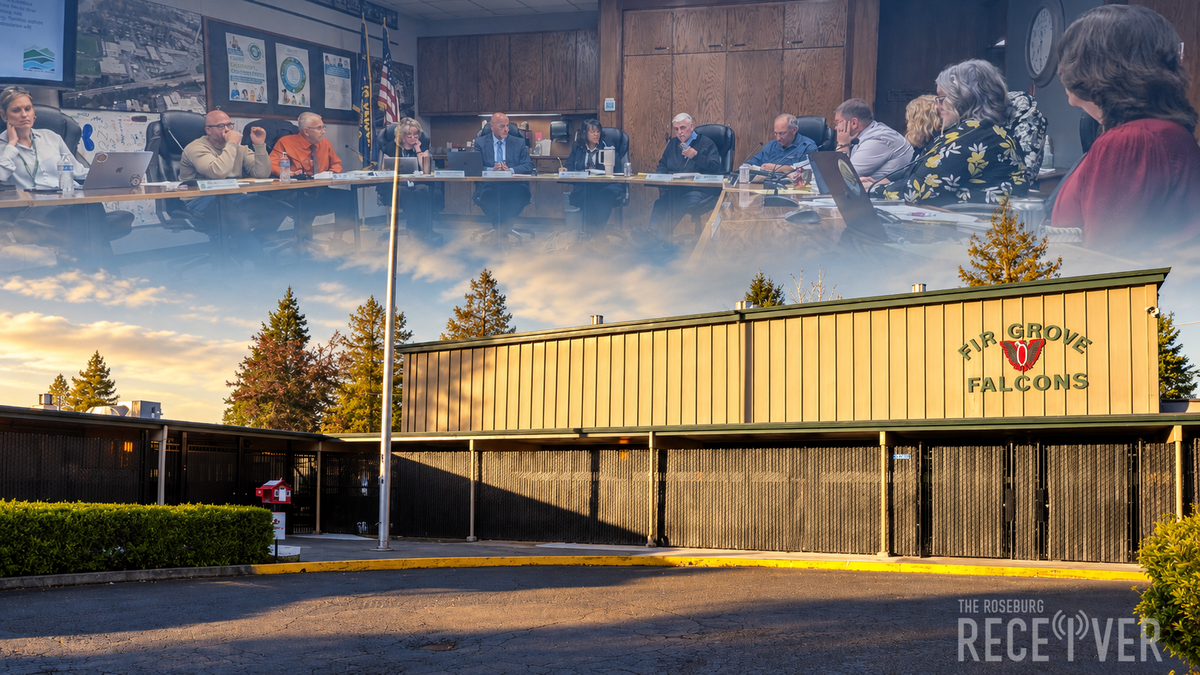
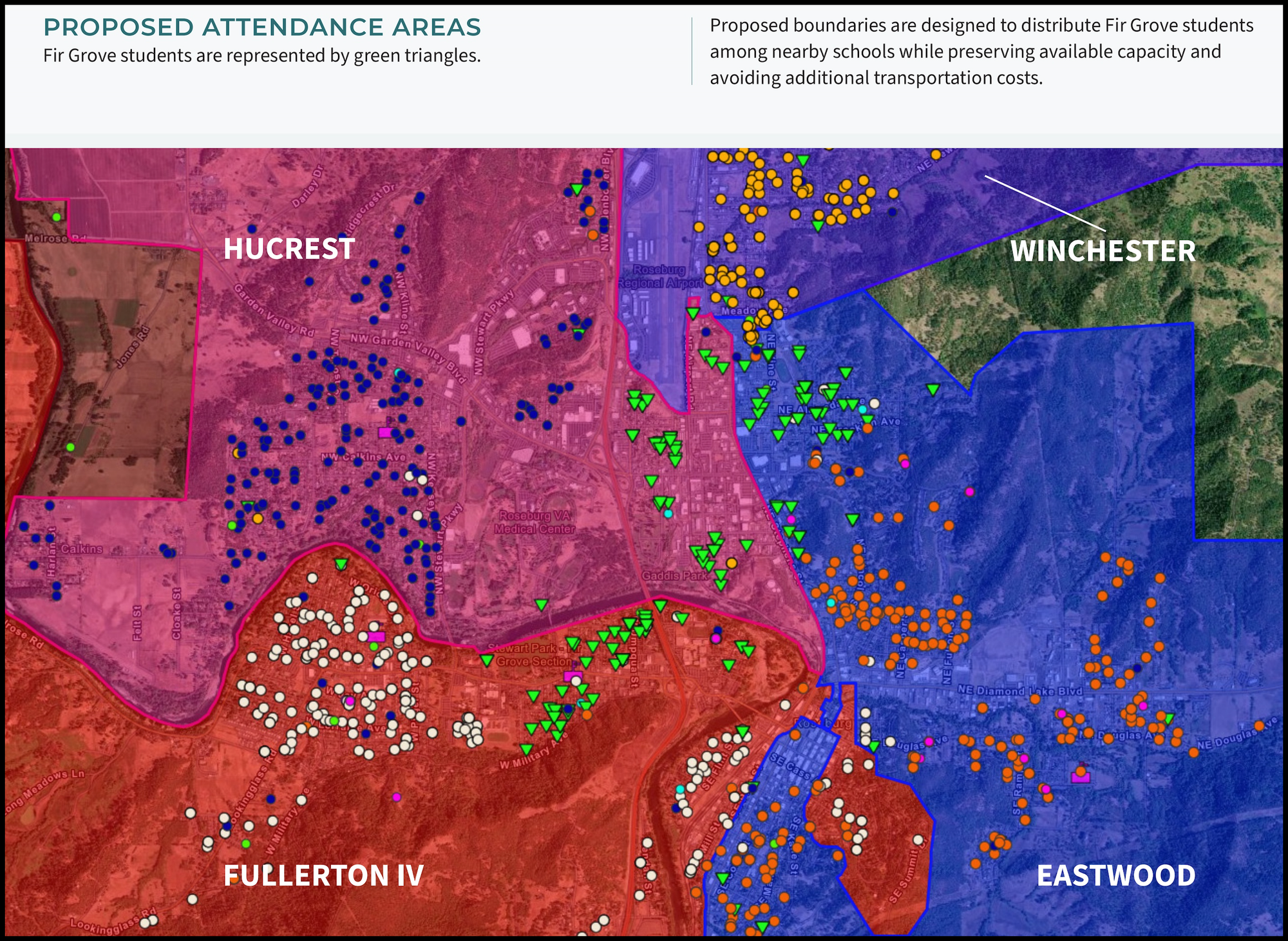
ROSEBURG, Ore. - Fir Grove Elementary School will close at the end of the 2026-27 school year following a unanimous vote by the Roseburg School Board on Wednesday, October 28. Students will begin attending Eastwood, Hucrest and Fullerton IV elementary schools in fall 2027, based on updated attendance boundaries.
The decision brings an answer to weeks of uncertainty about the school's future. It also begins months of transition planning for families and employees who will spend the rest of this school year at Fir Grove before leaving a school community built over generations.
Board members acknowledged the loss of familiar classrooms, friendships and daily routines as they considered Superintendent Jared Cordon's recommendation. Their discussion focused on declining enrollment, the condition and cost of school buildings, classroom organization, transportation and how to support students through the change.
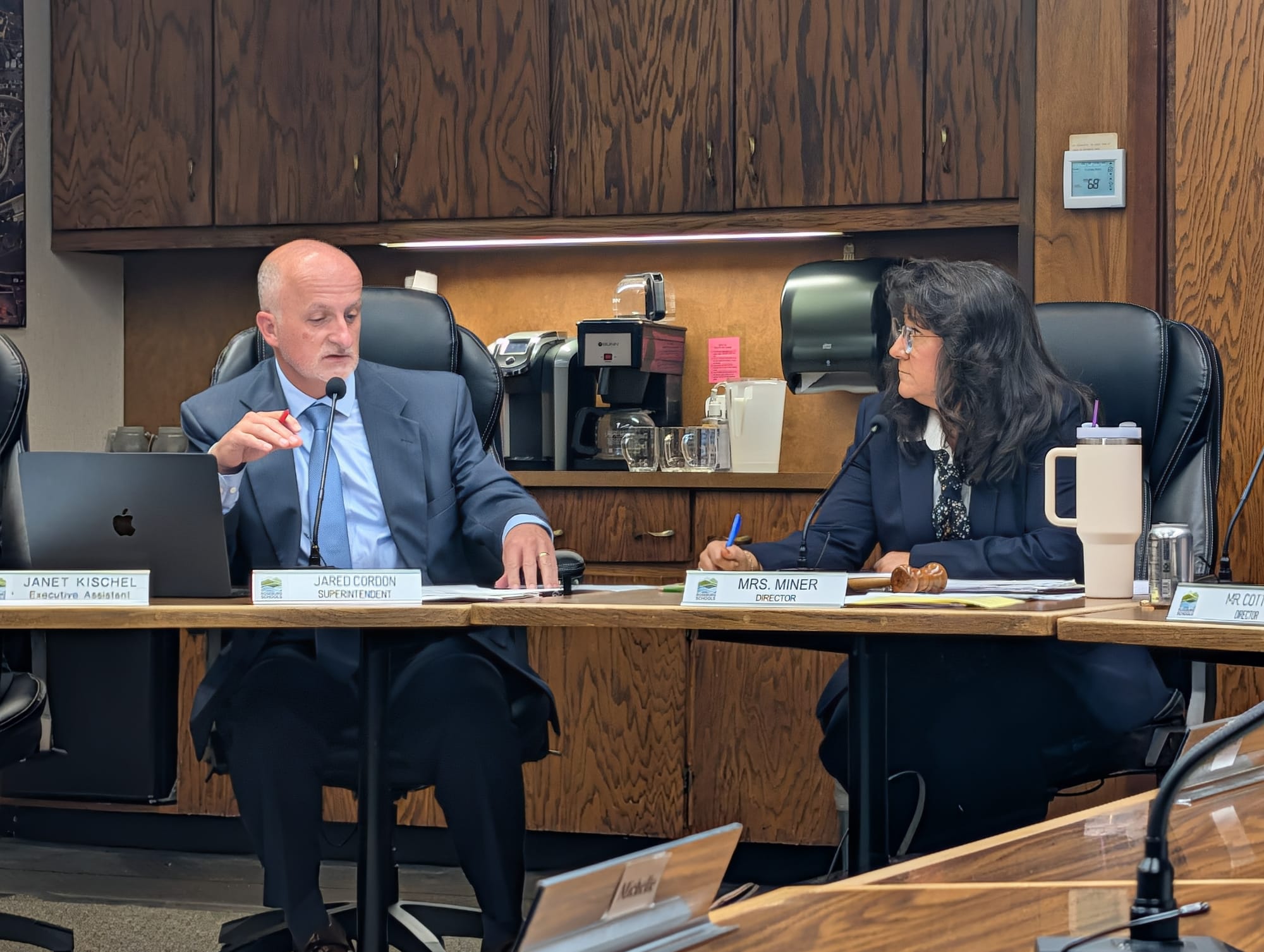
“This decision does not diminish the value of Fir Grove or the contributions of its staff and families,” Cordon said in the district's announcement. “It reflects the difficult choices we must make as we respond to declining enrollment, aging facilities and rising costs.”
Fir Grove will remain open through the conclusion of the current school year. Students are not being moved to other schools immediately.
The vote approves the closure recommendation, but several details still need to be worked out. Those include final staffing assignments, individual transportation arrangements and new locations for two specialized programs. No long-term use has been selected for the school property.
The Roseburg Receiver attended Wednesday's meeting and previously reported on the superintendent's September recommendation in a detailed overview of the Aligning to Thrive report.
Why Fir Grove Was Selected
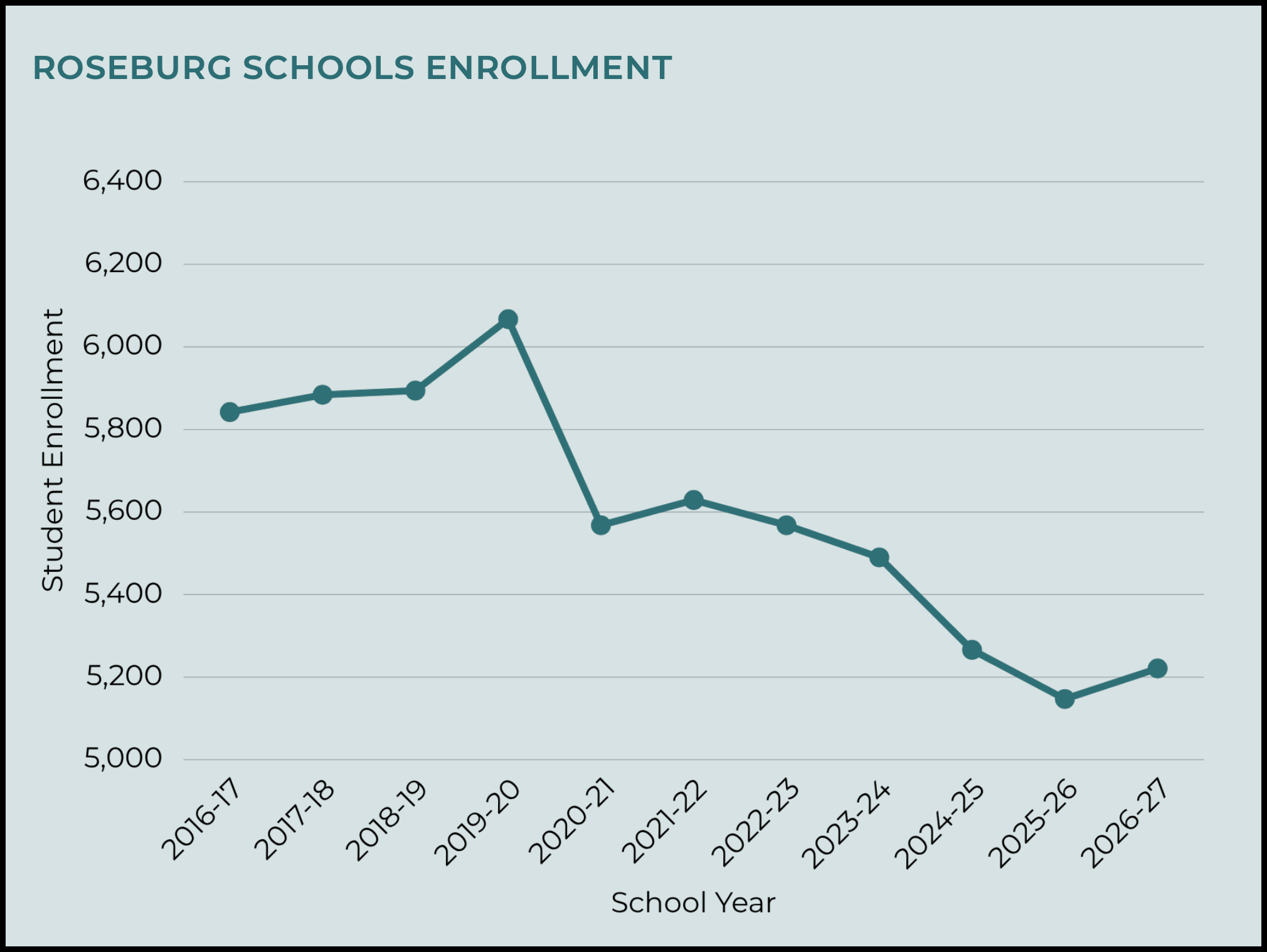
The district's central concern is that it operates more elementary school space than its enrollment requires. Districtwide enrollment declined from 5,842 students in 2016-17 to 5,221 in September 2026, a loss of 621 students, or nearly 11%. Its eight elementary schools served approximately 2,434 students in 2025-26, compared with a combined functional capacity of about 3,295. That put the elementary system at roughly 74% capacity.
The recommendation reduces the elementary system from eight schools to seven. Cordon told the board that he examined what closure would mean at each elementary school, including where students would go, how boundaries would change, what classroom arrangements would look like and how transportation would work.
He said Fir Grove was not selected before that evaluation began.
According to the written report, Fir Grove serves fewer than 200 students and is operating at approximately 54% of its functional capacity. The district concluded that closing it would require fewer students to change schools than other options examined, while limiting additional moves for students outside Fir Grove's current attendance area.
Nearby schools also have space to receive its students. The district's analysis projects Eastwood at approximately 91% of functional capacity after the boundary changes, Hucrest at 90% and Fullerton IV at 77%. Those are building capacity estimates, not predictions of individual class sizes.
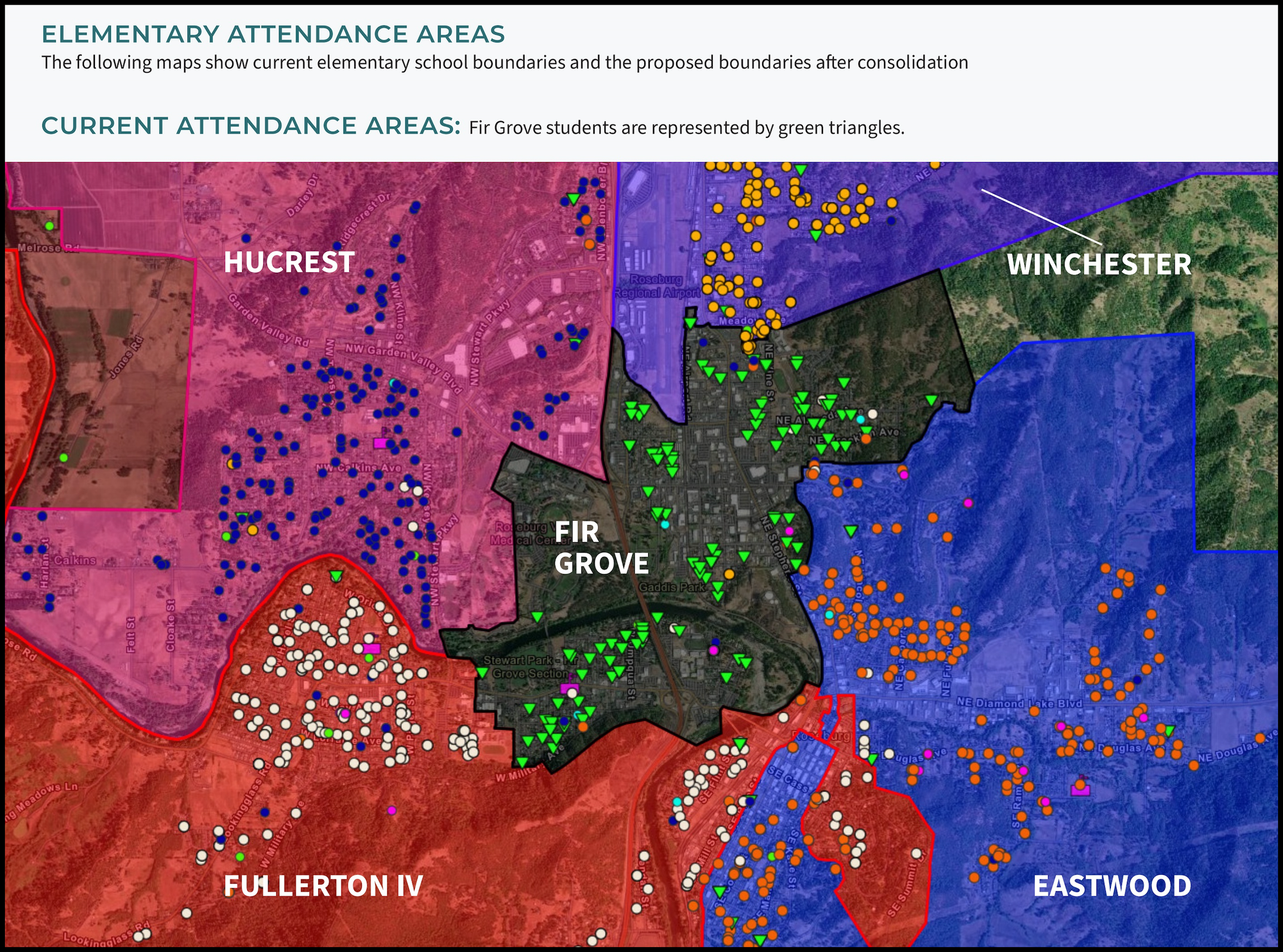
Transportation was another significant consideration. Cordon said the evaluation went beyond drawing boundaries on a map. Staff examined neighborhoods, drove streets, considered potential stops and looked at the buses and drivers different closure scenarios would require.
He said some alternatives would have sent children farther from their neighborhoods and required longer rides. The district's analysis found that Fir Grove students could attend the three receiving schools without additional transportation costs or long bus rides. Specific routes and arrangements still need to be developed and shared with families.
Facility needs also weighed in the decision. State assessments identify approximately $8.5 million in anticipated needs at Fir Grove over the next 10 years. That is a long-term estimate for maintaining existing building systems, rather than an immediate repair bill or a proposal to build a replacement school. Fir Grove has not received some of the major improvements completed at other district schools, including a major seismic rehabilitation.
Across the district, assessments conducted through the Oregon Department of Education identified approximately $116 million in anticipated maintenance, repair and replacement needs over the next decade, according to Wednesday's release. Cordon told the board that closing one school would not resolve the district's broader facility challenges.
The superintendent also described an educational reason for consolidating: having more than one classroom at a grade level gives teachers colleagues teaching the same material and gives administrators more flexibility when student numbers change.
At Wednesday's meeting, board members discussed grades at Fir Grove with only one classroom. Cordon said that arrangement makes it harder to balance enrollment and provide opportunities for teachers to plan together. Continued enrollment declines could also lead to more blended classrooms, where a teacher teaches students from two grade levels.
Board member Brandon Bishop asked whether research showed differences in student experience or test scores in blended classrooms. Cordon described the evidence as varied and discussed the value of teacher collaboration. The discussion did not establish a specific, measurable academic improvement that closing Fir Grove would produce.
Cordon also acknowledged that children are having positive experiences at Fir Grove and that the school provides stability for families. His argument for consolidation was about how the district organizes its elementary system, rather than a claim that Fir Grove's teachers are failing students.
The district says students will not simply be added to the existing number of classrooms at the receiving schools. Classroom sections and staffing will be determined through the annual planning process. Consolidation does not guarantee a particular class size.
Where Students Will Attend School
For families, the next school assignment will depend on their address under the updated boundaries. Fir Grove students will be divided among Eastwood, Hucrest and Fullerton IV, rather than moving together to a single campus.
The district's attendance boundary webpage includes separate maps showing the Fir Grove student areas assigned to each receiving school, along with links to maps by street name.
Families may request an in-district transfer to a school outside their assigned boundary. Approval is generally based on available space and the receiving school's ability to accommodate the student, and is determined by the receiving principal. A request does not guarantee placement.
Cordon said the district would also work with families whose children currently attend Fir Grove through transfer arrangements. Students in specialized programs will need planning tied to their programs and individual needs.
Specialized Programs And Student Support
Both the Complex Needs Classroom and the Profound Developmental Learning Center will continue, according to the district's announcement. The closure means relocating those programs, with services continuing without interruption.
The Complex Needs Classroom is operated by Douglas Education Service District and serves children from across Douglas County. The Profound Developmental Learning Center serves students from across the school district.
Cordon told the board that potential spaces had been identified, but final locations had not been selected. He said classroom teachers and program staff need to participate in evaluating the spaces because they understand needs that may not be apparent to others. Some locations could require modifications before students move.
Board members also asked about support for students moving from Fir Grove, a Title I school, to Hucrest, which currently is not. Cordon said planning anticipated Hucrest becoming a Title I school, with additional support as students move. He said those resources were accounted for in the district's financial planning rather than treated as a reduction.
What Happens To The Property
The future of Fir Grove's land and building drew direct questions during the meeting. Cordon said the property's value and possible future uses had not influenced his recommendation.
“This didn't impact the recommendation in the least,” he told the board. “In fact, I was very clear not to have anything that discussed things like property valuations.”
The district has not selected a long-term use for the campus. Its written plan calls for continued custodial attention, groundskeeping and maintenance while that question is evaluated. Potential community access to outdoor recreation areas would also need to be considered alongside campus security.
Cordon said he had obtained the property's 1957 deed and reviewed provisions concerning educational use and federal reentry rights. He described those provisions as appearing to have reached their time limits, while acknowledging that further work would be needed. That discussion was not an announcement of a sale, redevelopment project or final legal determination about future uses.
Board members also discussed whether the district would have options if enrollment grew again. Cordon pointed to the former Rose Elementary campus, which remains in use, as an example of a district building that could be returned to traditional elementary use. He did not announce a future reopening plan for Fir Grove.
Finances And Staffing
Financially, the district estimates consolidation could reduce annual General Fund expenses by approximately $1.3 million, depending on staffing decisions. It says declining enrollment and rising costs are expected to absorb much of those savings, reducing cuts or spending shifts that might otherwise be necessary.
The district already reduced its 2026-27 budget by approximately $4.5 million in response to enrollment losses, reduced grant funding and rising costs.
Final staffing decisions have not been made. The report says changes must follow collective bargaining agreements, applicable law and district procedures, with vacancies, retirements, attrition and assignment rights considered. It also anticipates that some reduction in force may be necessary to achieve the savings.
Cordon told the board that the next budget cycle will help determine staffing. The district hopes to have familiar staff move with students where assignments and staffing needs allow, but individual placements are not settled.
Preparing For The Transition
Board members questioned whether waiting might allow enrollment or funding to improve. Cordon said future conditions cannot be predicted with certainty, but he did not see enough evidence to recommend postponement. He also said delaying a decision would leave less time to prepare students, families and employees.
In the district's announcement, board Chair Andrea Miner said members had heard that uncertainty itself was difficult.
“We heard from families and staff that the uncertainty surrounding this decision was difficult, and we didn't want to prolong it unnecessarily,” Miner said.
“Making this decision now gives our district time to plan a thoughtful transition and ensure students, families, and staff have the support they need.”
At the meeting, Cordon described opportunities for students and parents to visit their receiving schools, participate in activities and become familiar with new surroundings before fall 2027. He discussed beginning that welcome process in the new calendar year, while recognizing that Fir Grove still has a school year to finish.
Board members returned repeatedly to children's concerns about friendships. They discussed helping students see which classmates would be moving with them and encouraging families to maintain friendships when children attend different schools.
The district also plans to work with the Fir Grove community on how to recognize the school's history. Details of that recognition and the broader transition plan remain to be developed.
After the unanimous vote, Cordon asked adults throughout the community to support the children affected by the decision.
“As a community, please let's pull together and get behind this transition, whether you have kids in the school or not, and ensure this transition is successful,” he said.
Families can find the report, boundary maps, frequently asked questions and an online question form on the district's Aligning to Thrive webpage.


Comments ()