
Roseburg Superintendent Recommends Closing Fir Grove Elementary After 2026-27 School Year
Roseburg Superintendent Jared Cordon recommends closing Fir Grove Elementary after the 2026-27 school year, citing declining enrollment, facility needs, and rising costs. The School Board has not approved the proposal and will consider public input before deciding.
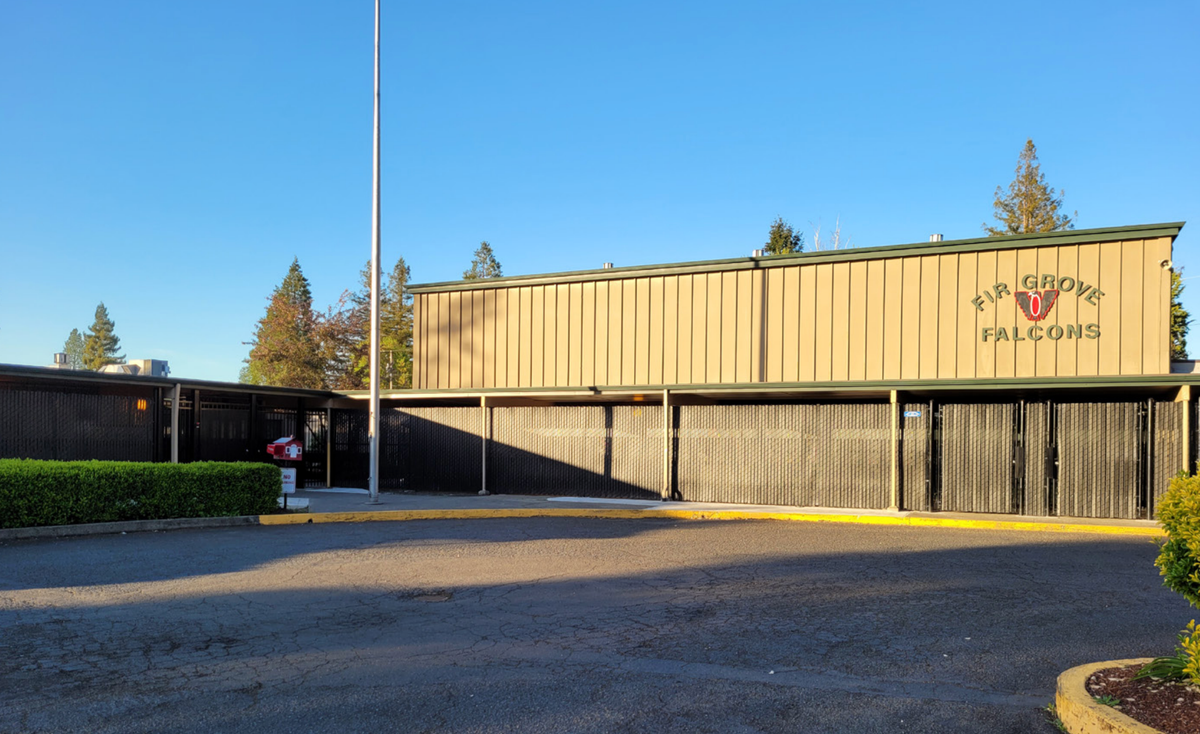
Roseburg Schools Superintendent Jared Cordon is recommending that Fir Grove Elementary close at the end of the 2026-27 school year, a proposal that would move students to three nearby elementary schools and reduce the district’s elementary campuses from eight to seven.
The recommendation is outlined in “Aligning to Thrive,” a September 2026 report examining declining enrollment, school capacity, aging buildings, operating costs, and the potential effects of consolidation on students and employees.
The Roseburg School Board has not approved the closure. The board will review the recommendation, consider public input, and determine whether to proceed. The district’s goal is to reach a final decision before the end of 2026, giving families and staff the remainder of the school year to prepare if the proposal is approved.
Fir Grove would remain open throughout the current school year. Under the proposed attendance boundaries, students would begin attending Eastwood, Hucrest, or Fullerton IV elementary schools in fall 2027.
For families, the proposal would mean leaving an established school community and adjusting to new classrooms, staff, and routines. Cordon acknowledges those consequences in the report and says the recommendation is not a judgment about Fir Grove’s students, employees, or educational quality.
“Fir Grove is more than a building,” Cordon wrote. “It is a community built through generations of students, employees and families.”
The district says several factors led to the recommendation, including Fir Grove’s enrollment of fewer than 200 students, available space at nearby schools, transportation considerations, and anticipated building expenses.
According to the report, closing Fir Grove would require fewer students to change schools than other consolidation options examined. Proposed boundary adjustments would also limit the number of students outside the current Fir Grove attendance area who would need to move to another school.
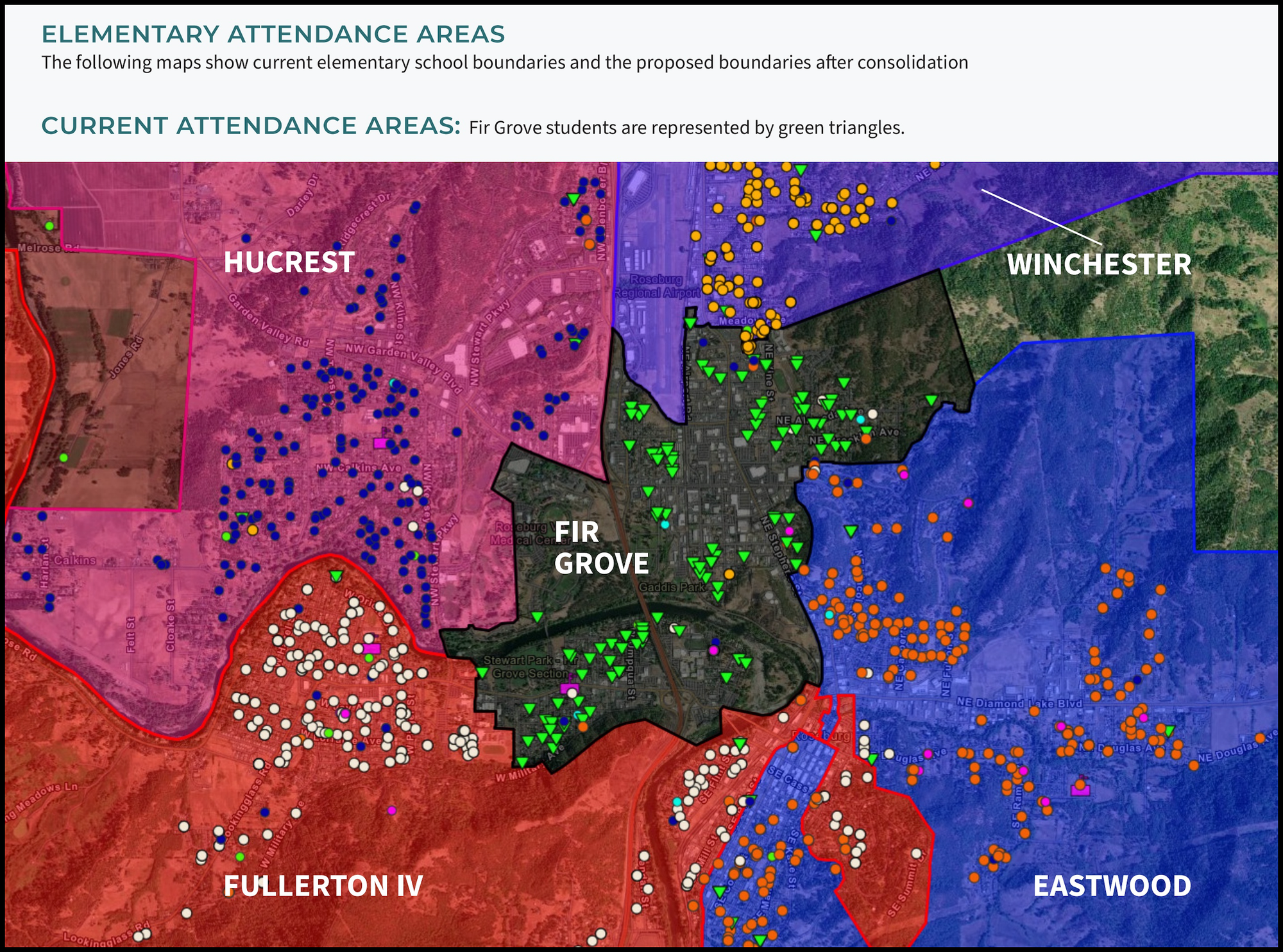
The district’s analysis projects that, after the boundary changes, Eastwood would operate at approximately 91% of its functional capacity, Hucrest at 90%, and Fullerton IV at 77%. Functional capacity refers to the number of students a school can accommodate under its operating configuration.
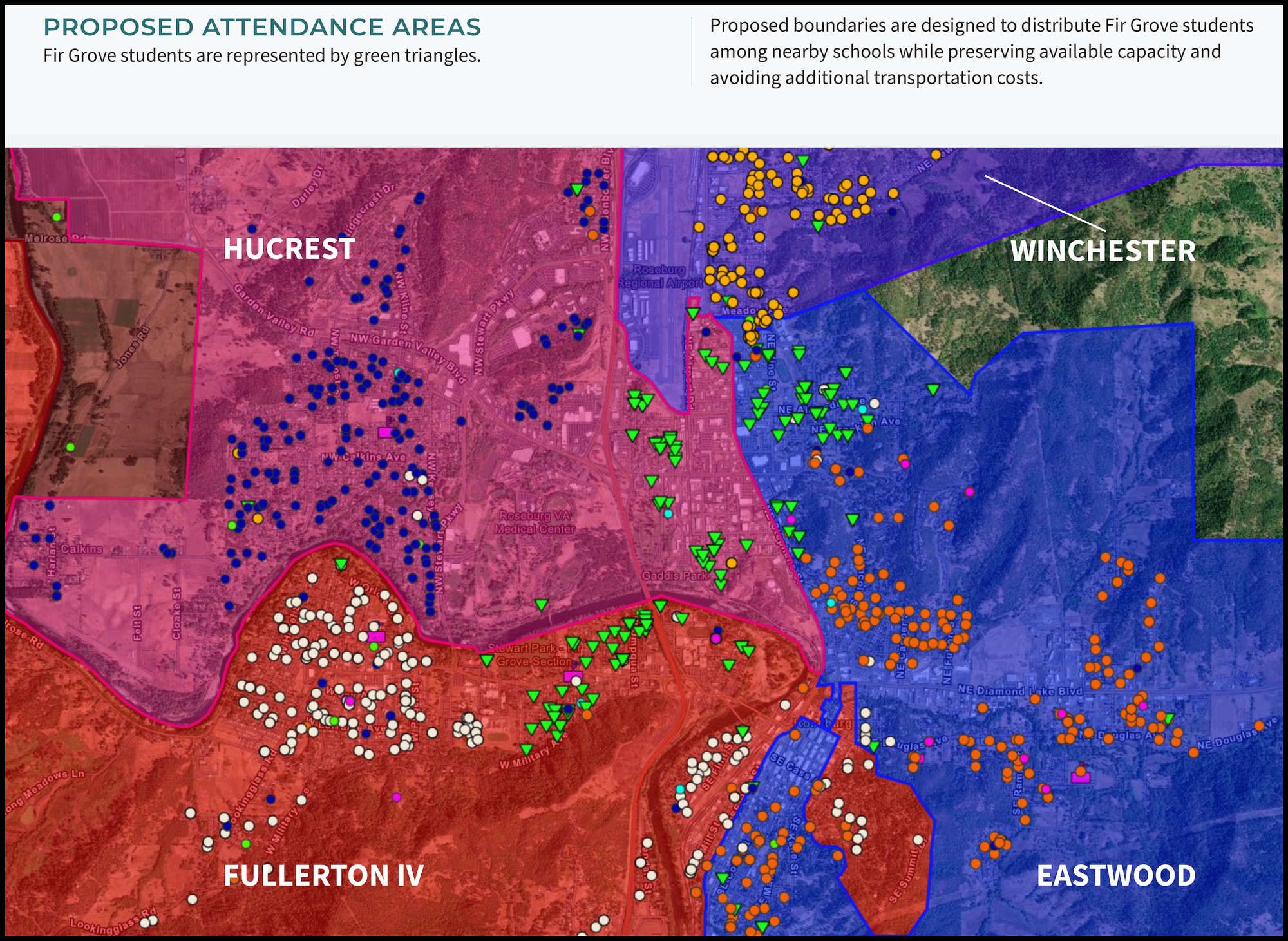
The report says the proposed arrangement could accommodate students without additional transportation costs or long bus rides. Specific routes and transportation information would be developed during transition planning if the board approves consolidation.
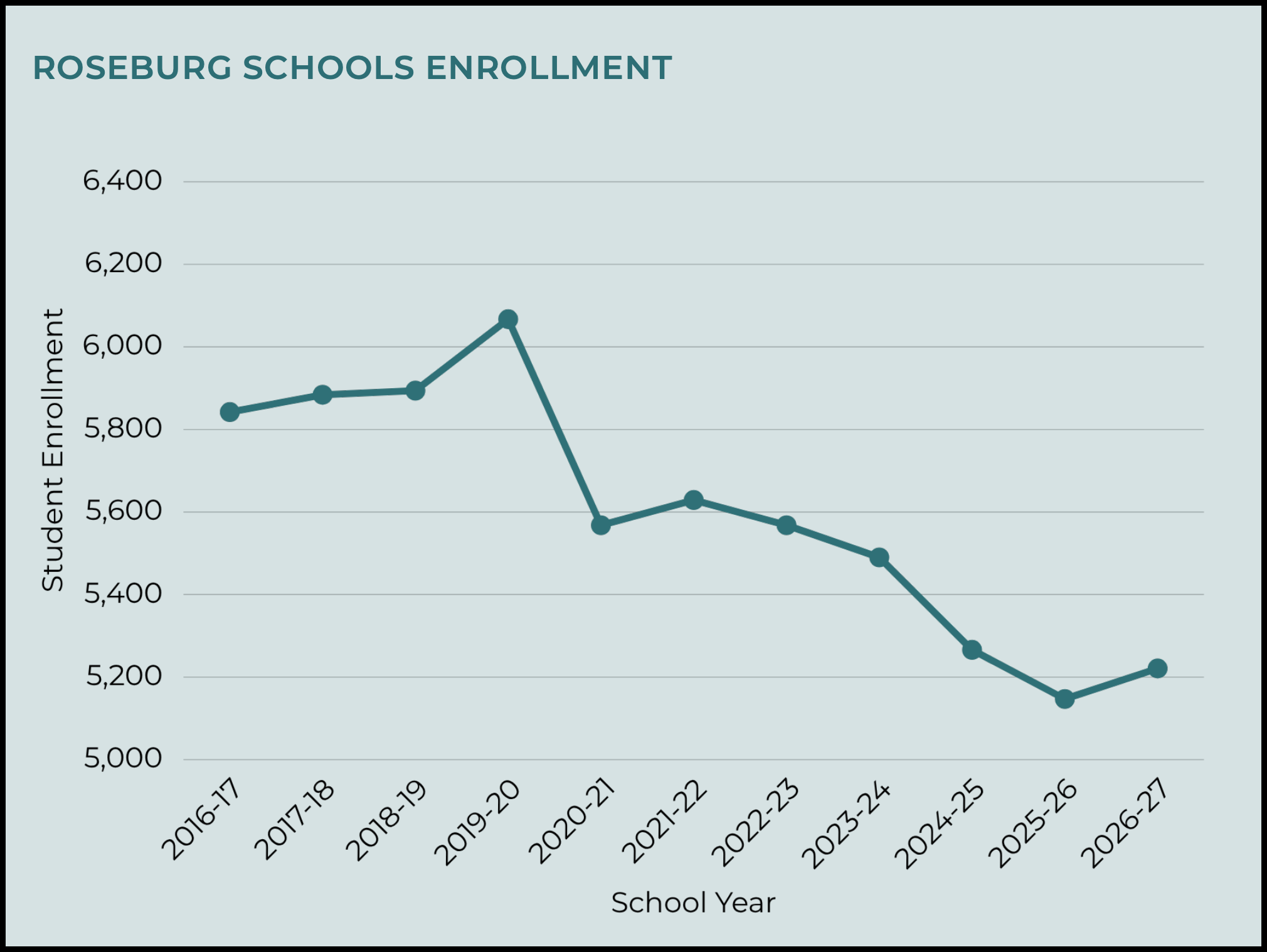
The proposal comes as Roseburg Schools serves substantially fewer students than it did a decade ago.
District enrollment fell from 5,842 students in 2016-17 to 5,221 as of September 2026, a decrease of 621 students, or nearly 11%. Meanwhile, the district continues to operate essentially the same network of schools.
In 2025-26, its eight elementary schools served approximately 2,434 students against a combined functional capacity of about 3,295. That placed the elementary system at roughly 74% capacity, with space for approximately 860 additional students. Fir Grove is operating at about 54% capacity in 2026-27, according to the report.
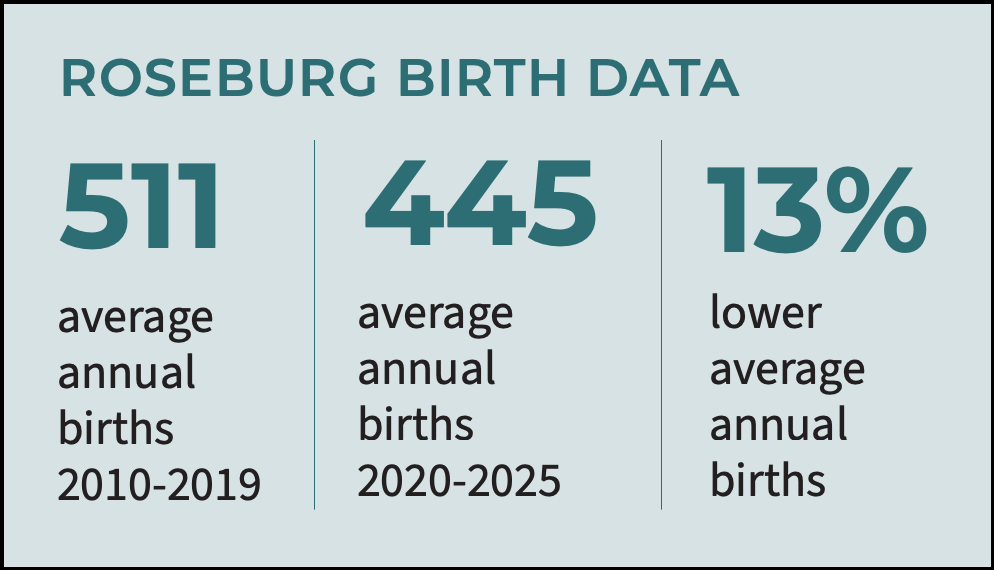
Cordon also points to declining births and population forecasts projecting fewer young children in Douglas County over the coming decade. The report acknowledges that housing development, employment opportunities, and other community conditions could influence future enrollment, but says those possibilities must be weighed alongside existing demographic trends.
Beyond unused space, the district argues that smaller enrollment can make classroom organization more difficult. Some schools have only one teacher at certain grade levels, limiting options for balancing class sizes and collaboration among teachers working with the same grade. Small student groups can also lead to blended classrooms in which one teacher teaches two grade levels.
The district says consolidation could provide more flexibility in arranging classrooms and staffing. It does not guarantee a particular class size, and classroom assignments would be determined through the annual staffing process.
Facility costs are another major part of the recommendation.
State facility assessments identify approximately $47.7 million in anticipated needs across the district’s elementary schools over the next 10 years, including about $8.5 million at Fir Grove, which was originally constructed in 1960.
Those estimates cover deferred maintenance and projected repairs or replacement of existing building systems. They do not represent major modernization projects or improvements, and the district considers them a conservative planning baseline.
The report says Fir Grove has not received some of the extensive capital improvements completed at other schools, including a major seismic rehabilitation. Closing it as an elementary school would allow the district to evaluate other uses rather than continuing the investments required to operate it for that purpose.
Roseburg Schools’ most recent successful capital improvement bond was approved in 2000. Subsequent measures in 2020, 2022, and 2023 failed. Although the district reports investing more than $30 million in facility improvements since 2020-21 through grants and other resources, it says available funding has not kept pace with long-term needs.
Cordon estimates consolidation could reduce annual General Fund expenses by approximately $1.3 million, based on current staffing and anticipated employee transitions. The final amount would depend on staffing decisions.
The district cautions that those savings would not necessarily become additional money available for new spending. Declining enrollment and rising costs are expected to absorb much of the reduction, potentially limiting cuts that would otherwise be needed elsewhere.
Roseburg Schools already reduced its 2026-27 budget by approximately $4.5 million, including staffing cuts, in response to enrollment losses, reduced grant funding, inflation, and retirement costs.
The report also makes clear that consolidation could affect employees.
Staffing changes would follow collective bargaining agreements, applicable law, and district procedures, with vacancies, retirements, attrition, and employee assignment rights considered. However, the district anticipates that some reduction in force may be necessary to achieve the projected savings.
Where staffing needs and assignments allow, the district would seek opportunities for familiar employees to move with students to their receiving schools.
Two specialized programs at Fir Grove would also require planning.
The Profound Developmental Learning Center would move to another elementary school for 2027-28, with services continuing, according to the report. The Douglas Education Service District’s Complex Needs Classroom, which serves students from across Douglas County, would require coordination with Douglas ESD to identify an appropriate location that meets students’ educational and support needs.
If consolidation is approved, families would receive information about their assigned schools before the transition. Plans include opportunities to visit campuses, meet staff, and connect with receiving schools through ParentSquare before the current school year ends.
The district would also work with the Fir Grove community to determine how to recognize the school’s history.
No long-term use for the property has been selected. The district would continue maintaining and securing the campus while evaluating its future, including whether community access to outdoor recreation areas could be provided safely.
Community members can review the full report, proposed boundary maps, frequently asked questions, and an online question form on the district’s Aligning to Thrive webpage.
If the board rejects the recommendation, Fir Grove would remain open and the proposed boundary changes would not take effect. The district’s broader work on enrollment, finances, and facility needs would continue.



Comments ()