
Fir Grove Families and Teachers Ask School Board to Weigh Student Needs Before Closure Decision
Fir Grove families, teachers, and students urged the Roseburg School Board to consider student support, transportation, and community ties before deciding whether to close the school. The board has not approved the proposal.
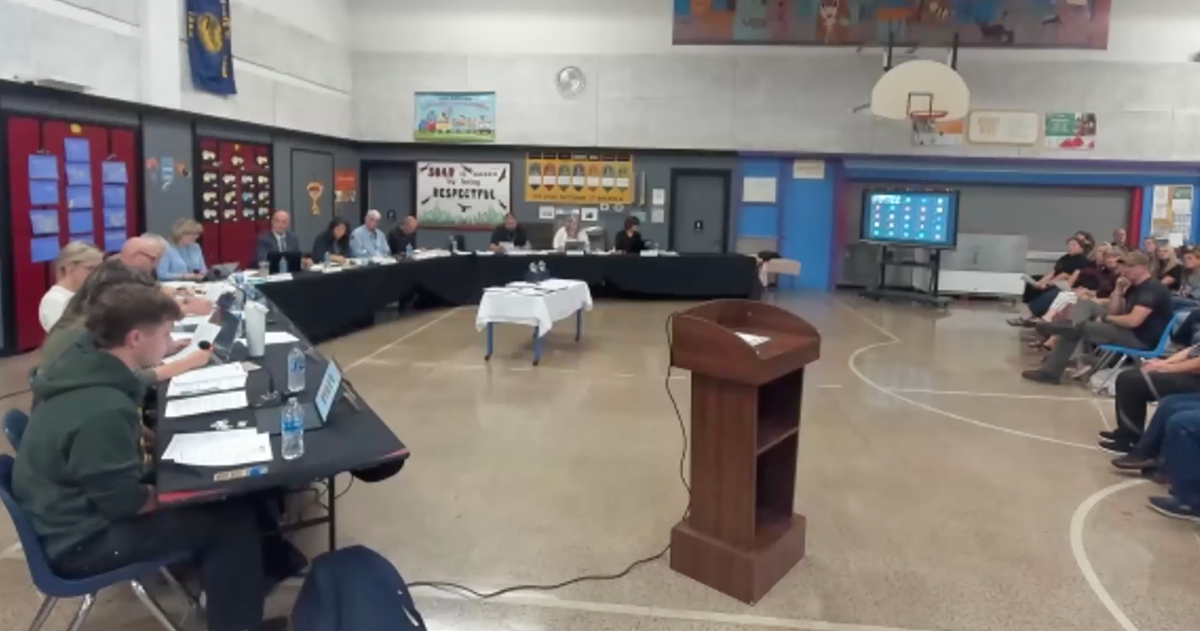
ROSEBURG, Ore. - Parents, teachers, and students asked the Roseburg School Board on Wednesday to consider how closing Fir Grove Elementary would affect children who depend on its familiar classrooms, trusted adults, and specialized support.
Speaking at the school during the board’s Oct. 14 meeting, community members described friendships built since kindergarten, children who had found confidence after struggling elsewhere, and families whose access to school could become more difficult if students move to other campuses.
Their comments also raised practical questions: Which services would follow students? How would specialized classrooms be relocated? What transportation barriers would families face? And how much would the district ultimately save while continuing to maintain the property?
The board has not approved closing Fir Grove. Superintendent Jared Cordon’s recommendation would close the school after the 2026-27 school year and move students to Eastwood, Hucrest, and Fullerton IV elementary schools beginning in fall 2027. The district is seeking a decision before the end of 2026.
Parent Hollie Brooks acknowledged the district’s financial challenges and declining enrollment but asked board members to give equal attention to the consequences for children.
She described how familiar routines and supportive teachers can be essential for a child who struggles with unfamiliar environments.
“An available seat in another classroom doesn’t automatically mean a child will feel safe, accepted, and supported,” Brooks said.
Brooks also questioned how families could fully evaluate the proposal before specific transportation arrangements are available. She asked what the projected savings would be after accounting for expenses the district would retain at Fir Grove.
Other speakers described the importance of keeping children connected to the people they already know.
A father whose daughter has attended Fir Grove since kindergarten said she looks forward to seeing her friends and has developed strong relationships with teachers. Drawing on his own experience changing schools as a child, he encouraged the board to explore alternatives that would preserve that stability.
A current Fir Grove student asked board members to remember the children and families affected by their decision. A former student, now in sixth grade, returned with his mother to explain why he hoped the school would remain open.
Teacher Lindsay Ferguson used her time to share concerns her students had expressed.
“Please don’t close our school, my students asked me to ask you,” Ferguson said. “This is our favorite place to be.”
She said students talked about their first friendships, teachers they hoped to have in future grades, and younger siblings who might never attend the school.
They also asked what would happen to classmates in Fir Grove’s specialized programs, describing connections formed at recess through playing together, talking, and helping push wheelchairs.
A substitute teacher, whose children attended Fir Grove, urged the board to examine whether receiving schools could provide comparable support for students with complex medical and developmental needs.
“The building capacity is not the same as service capacity,” she said.
She pointed to emergency access at Fir Grove and said any receiving location would need appropriate space, staffing, specialized support, and safety arrangements from the beginning.
She also raised concerns about families experiencing homelessness and those without reliable transportation. Getting a child to school by bus, she said, does not resolve a parent’s need to reach a sick child, attend a meeting, or participate in school activities.
The district’s published proposal says services through Fir Grove’s Profound Developmental Learning Center would continue at another elementary school if consolidation is approved. Relocating the Douglas Education Service District’s Complex Needs Classroom would require coordination with Douglas ESD to identify an appropriate location.
Fifth grade teacher Courtney List described the level of support needed within her own classroom. Of her 30 students, she said, 15 have individualized education programs or Section 504 plans.
List said she worried that students already dealing with instability would face another difficult transition. She urged board members to advocate for families who may have limited time or resources to organize against the proposal.
Other speakers suggested delaying the decision, exploring different attendance boundaries, finding additional revenue, or considering another school bond. Those suggestions were offered during public comment; the board did not adopt them as alternatives at the meeting.
The district’s case for consolidation centers on declining enrollment, unused elementary school capacity, aging facilities, and rising operating expenses.
As The Roseburg Receiver previously reported, district enrollment declined from 5,842 students in 2016-17 to 5,221 in September 2026. Cordon estimates consolidation could reduce annual General Fund expenses by approximately $1.3 million, with the final amount depending largely on staffing decisions.
The district says the recommendation does not reflect the quality of Fir Grove’s students or staff. Its analysis identifies approximately $8.5 million in anticipated building needs at the school over the next decade.
During his report Wednesday, Cordon thanked employees and community members for conversations he described as respectful and emotional. He acknowledged questions about busing and class sizes and said the district was committed to sharing information openly.
Cordon also outlined a separate financial concern involving the expiration of pension obligation bonds and anticipated increases in the district’s Public Employees Retirement System costs.
He said preliminary estimates indicated the additional expense could reach approximately $2.4 million during the current school year and as much as $5.3 million in 2027-28. The district was still awaiting calculations from PERS, and Cordon said he expected to provide a clearer update at the November board meeting.
Cordon said the district had been setting money aside for the expense and did not anticipate current-year staffing adjustments to address it. He cautioned, however, that the emerging estimates were higher than previously expected.
Board members thanked speakers for participating and acknowledged the difficulty of considering a school closure. One director requested a summary of questions submitted through the district’s online form and the district’s responses. Cordon agreed to provide it.
Earlier in the evening, Principal Katrina Hanson presented Fir Grove’s academic progress and family engagement efforts. The board also recognized office manager Lisa Jarrett and kindergarten teacher Amy Larman with Crystal Apple Awards.
Families can review the consolidation report, proposed boundaries, and frequently asked questions, or submit questions through the district’s Aligning to Thrive webpage. If the board rejects the recommendation, Fir Grove would remain open and the proposed boundary changes would not take effect.


Comments ()