
Steamroller Print Brings the Umpqua River and Takelma Language to Life
A three-by-five-foot linocut of the Umpqua River printed with a steamroller at Umpqua Valley Arts uses augmented reality and audio recordings to introduce viewers to words spoken in Takelma.
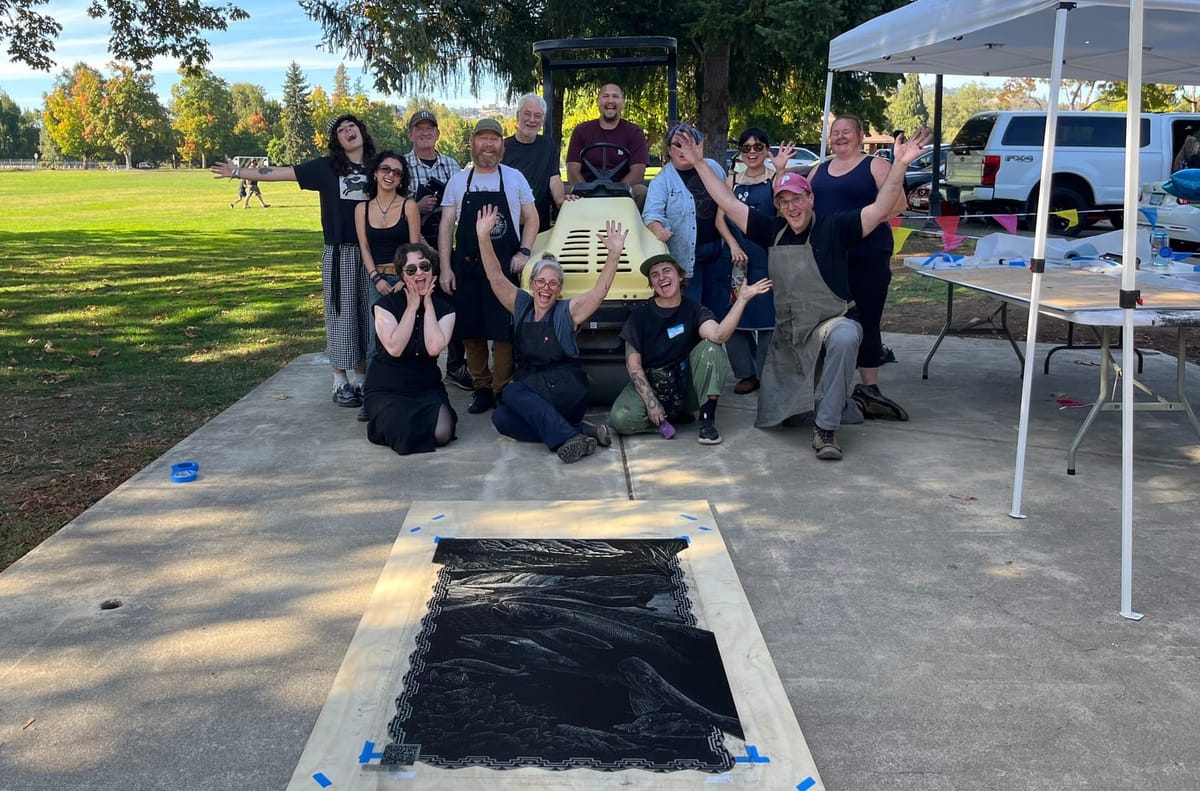
A three-by-five-foot linocut of the Umpqua River printed with a steamroller Saturday does more than create a picture on paper. When viewed through a phone or tablet, the artwork becomes an interactive experience featuring words spoken in Takelma.
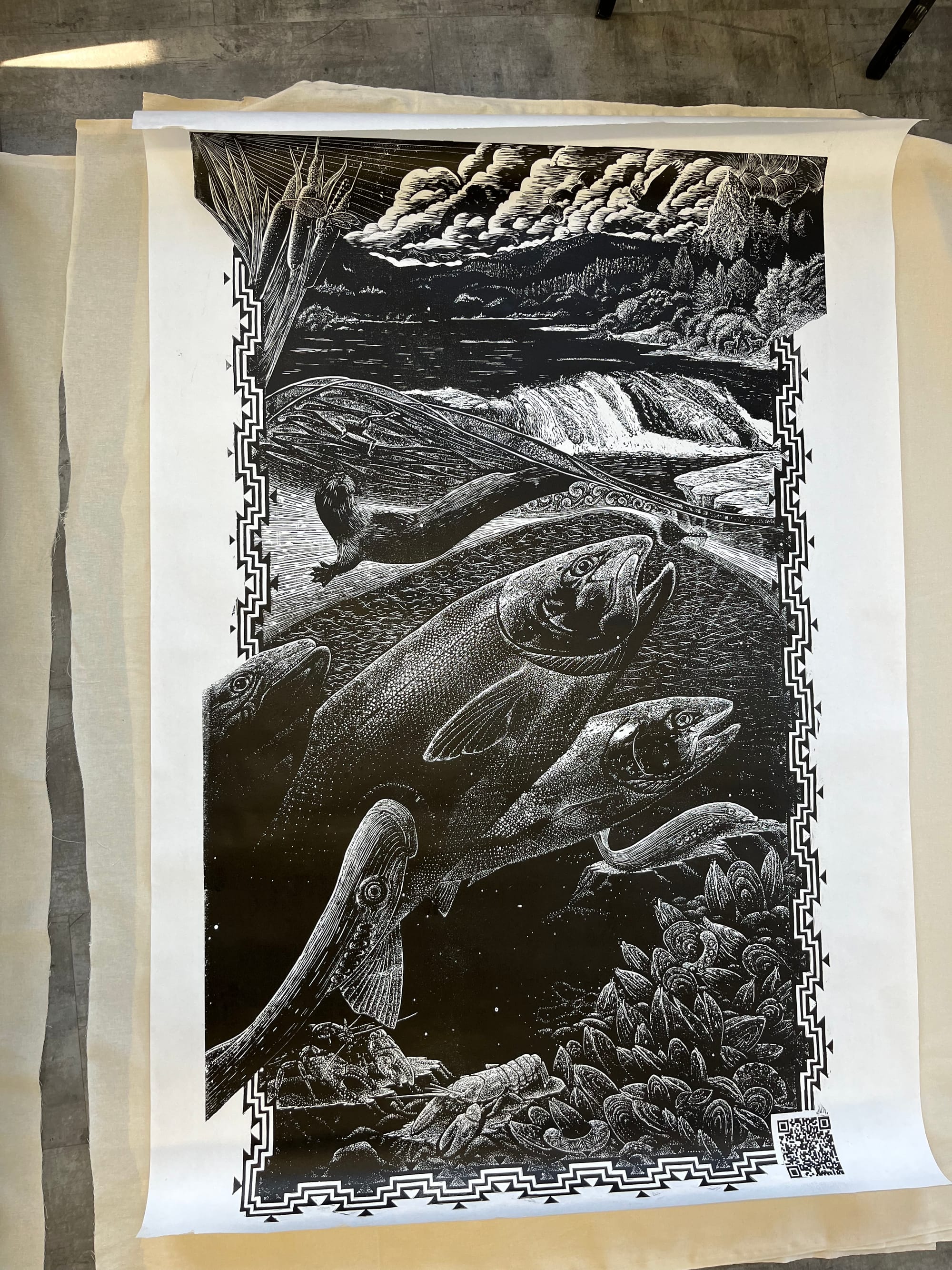
The work, titled “How Important Is It?,” was created by Corvallis large-format printmaker Keith Van Norman for Umpqua Valley Arts’ Steamroller Big Print Event on Sept. 19.
Artists gathered in the parking lot at Umpqua Valley Arts in Roseburg to transform large carved blocks into prints using a steamroller. UVA provided participating artists with materials and a small stipend, while visitors watched the printing process and took part in hands-on printmaking activities.
Van Norman developed his piece in collaboration with members of the Cow Creek Band of Umpqua Tribe of Indians. The print depicts the Umpqua River and incorporates an augmented-reality experience that can be accessed by scanning a QR code.
After opening the linked webpage and allowing it to use the device’s camera, viewers point their phone or tablet at the print. Interactive buttons then appear over different subjects within the artwork. Selecting a button plays an audio recording naming that subject in Takelma.
The recordings feature the voice of Elizabeth Bryant from the Takelma Language Program.
Van Norman said the collaboration began when he contacted Cow Creek Tribal Culture Program Manager Jennifer Bryant and explained what he hoped to create. He later met through Zoom with Bryant and Cassandra Nava to discuss the project.
“We talked about subject matter that would be relevant to the Tribe,” Van Norman said.
He reviewed the Tribe’s kindergarten through 12th-grade curriculum to select most of the subjects included in the print. He then submitted sketches, incorporated additional suggestions, and sent the final designs to the Tribe for review before beginning the carving process.
While Van Norman carved the large block, audio recordings were created for the augmented-reality portion of the project. He later used images from a steamroller printing event in Portland as the visual anchor for the interactive feature and sent demonstrations and videos to the Tribe for review.
“I think it’s important to keep this language alive in the world and make it available to all Tribal members in order to strengthen cultural identity,” Van Norman said.
Van Norman was also scheduled to lead a printmaking demonstration Monday with the Tribe’s after-school program.
“I hope to inspire them to make art that is meaningful to them,” he said.
Van Norman credited Umpqua Valley Arts with creating the opportunity for the work to take shape.
“This whole thing wouldn’t be possible without having been invited to Umpqua Valley Arts’ steamroller printmaking event,” Van Norman said.
He said the invitation inspired him to create a piece specifically connected to the Umpqua Valley.
During Saturday’s event, large linocut blocks were printed multiple times using the steamroller. One print from each block was retained for UVA’s private collection, while the remaining prints stayed with the artists for their portfolios.
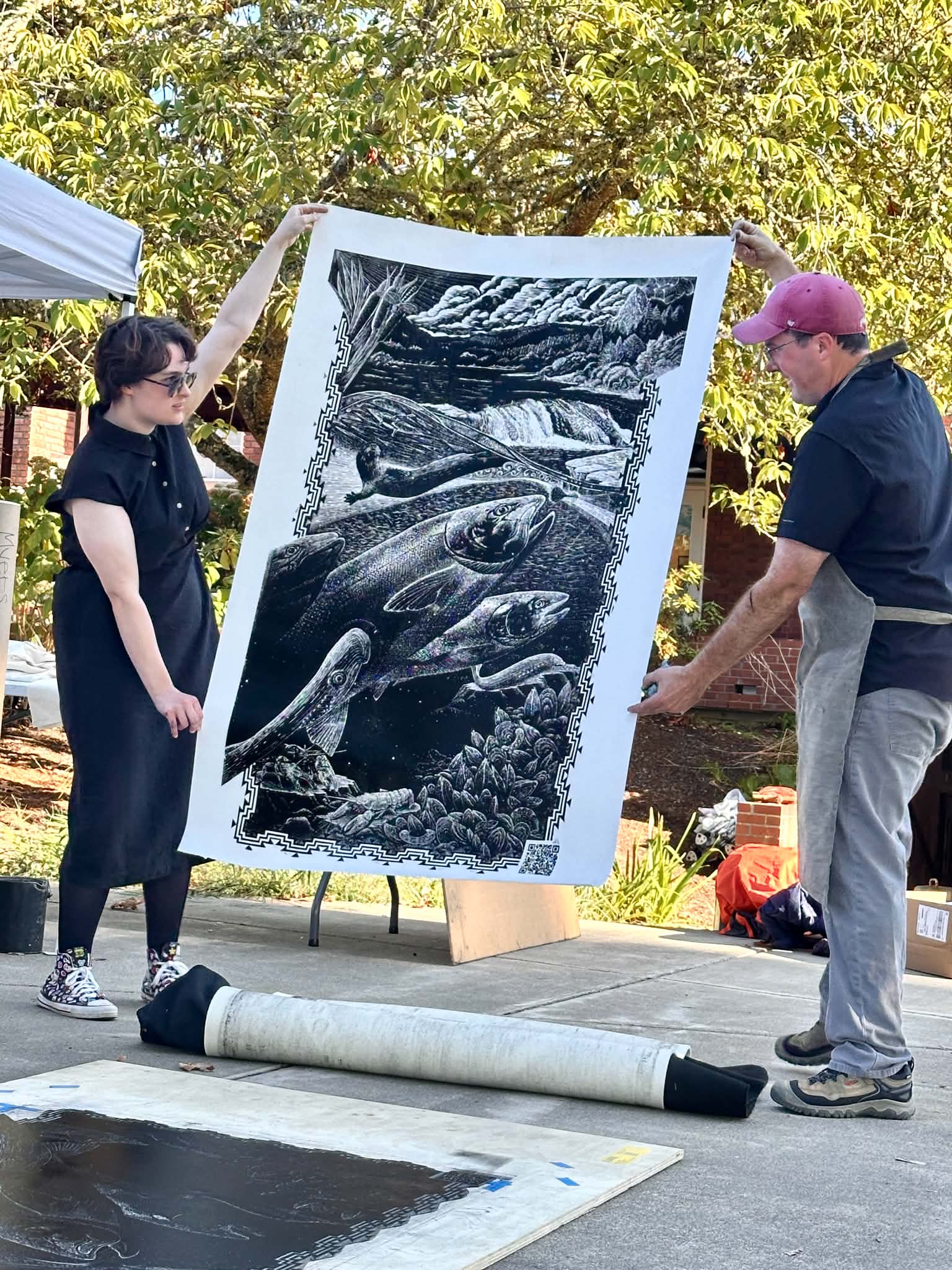
More of Van Norman’s work can be viewed at https://dutch318.wixsite.com/keith-van-norman.
Comments ()