
Roseburg Police Details Immigration Enforcement Policies and Limits on Cooperation With Federal Authorities
Roseburg Police has outlined what officers can and cannot do involving federal immigration enforcement, detailing recent training, limits under Oregon law and circumstances when officers may interact with ICE.
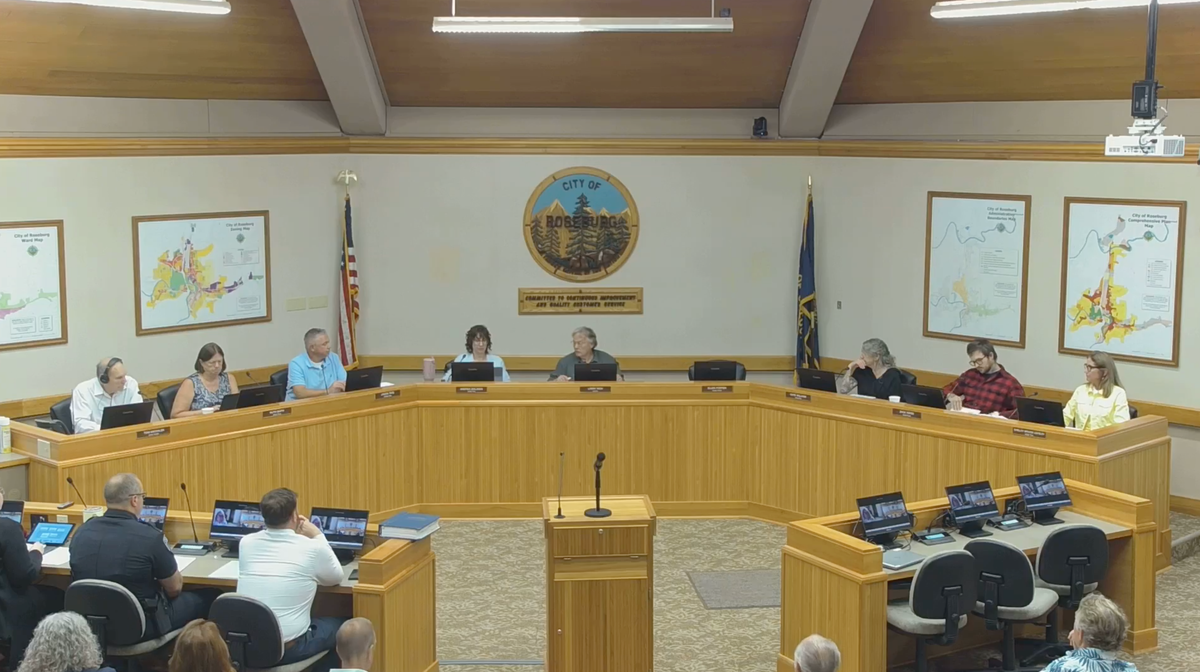
ROSEBURG, Ore. - The Roseburg Police Department has provided the City Council with a detailed explanation of how local officers are trained to handle immigration-related issues, including when they may communicate with federal immigration authorities and when Oregon law prevents them from assisting with immigration enforcement.
The information was included in the amended agenda packet for the Roseburg City Council's Aug. 24 meeting under a department item titled "Immigration Policy and Training."
The item was informational. It did not propose a new immigration ordinance, change existing city law, or ask councilors to approve a new policy. City staff said the presentation was prepared in response to questions raised at recent council meetings about Roseburg Police training and immigration enforcement.
Police Say Immigration Policies Were Reviewed in July
Roseburg Police uses Lexipol for its department policy manual. According to the city, those policies are developed around applicable state and federal law, regulations and professional standards, are reviewed by attorneys and are updated as laws and court decisions change.
The department said employees completed an annual review and training on the entire policy manual in July, including policies dealing with immigration. Supervisors also conducted additional training specifically related to immigration policies.
The council packet then lays out several situations in which Roseburg Police may interact with U.S. Immigration and Customs Enforcement, commonly known as ICE, as well as a longer list of activities the department says are prohibited under Oregon law and department policy.
What Roseburg Police Says Officers May Do
According to the city's summary, Roseburg Police may:
- Request information from ICE during a local criminal investigation. The department may seek information about someone identified in ICE records when it is relevant to a local criminal case. Police said this happens infrequently and is most commonly associated with human trafficking investigations.
- Arrest someone wanted under certain federal criminal immigration laws when there is a warrant signed by a federal judge. The city's materials specifically distinguish a judicial warrant from a document signed by an ICE official.
- Provide certain information about someone in custody. Information may be provided to ICE if it is already publicly available or if the department is responding to a subpoena issued by a court. The packet distinguishes a court subpoena from an ICE administrative subpoena.
The city's presentation makes a distinction between participating in a criminal investigation or complying with a judicial process and using local police resources specifically to carry out federal immigration enforcement.
What Roseburg Police Says Officers May Not Do
The council packet provides a longer list of restrictions.
Roseburg Police says Oregon law and department policy prohibit officers from using public facilities, city property, agency money, equipment, technology or personnel to detect or apprehend people for the purpose of enforcing federal immigration law.
The packet specifically lists detecting, apprehending, arresting, detaining or holding someone for ICE as examples of activities local resources cannot be used for.
The department also says officers may not:
- Allow ICE, Homeland Security Investigations or other federal officials working on immigration matters into portions of the police agency that are not normally open to the public.
- Provide nonpublic information such as a person's contact information, country of birth, custody status, release date, parole or probation appointments, or home and work addresses, except when permitted through a court subpoena or when the information is already public.
- Investigate or question someone on behalf of ICE.
- Deny privileges, benefits, services or opportunities to someone on parole, probation or in custody because of suspected immigration status or the existence of an immigration detainer, hold or civil immigration warrant.
- Ask about a person's immigration status, citizenship or country of birth except in circumstances specifically allowed by law.
- Provide information about someone in custody to ICE for immigration enforcement unless the information is public or provided under a court subpoena.
The packet also addresses civil arrests involving people going to court. According to the department, a civil arrest generally cannot be made without a judicial warrant or order inside a court, on property adjacent to a court or while someone is traveling to or from a court proceeding.
Immigration-Related Records Requests
Roseburg Police also addressed how it handles records requests from federal agencies.
According to the city's presentation, immigration-enforcement records requests from ICE, HSI or other federal agencies must be denied under the circumstances described in the policy. The denial must be documented, and a copy must be sent to the Oregon Criminal Justice Commission as part of a monthly reporting process.
City Employees Were Also Given Guidance
The issue is not limited to police officers.
The council packet says Roseburg Human Resources provided guidance to all city employees in July regarding possible contact with federal immigration authorities.
Employees were told that the City of Roseburg does not have a role in enforcing federal immigration law. Non-law-enforcement employees were instructed to contact Human Resources if federal immigration authorities approach them during their work or request access to areas of city facilities that are not open to the public.
Police employees were instructed to continue following department policy and the established chain of command.
Officers Cannot Arrest Someone Solely for Undocumented Presence
One of the policies attached to the council packet provides additional detail regarding foreign nationals.
The policy states that officers may take enforcement action when there is probable cause that a foreign national has violated federal criminal law, state law or a local ordinance.
However, the same policy says Roseburg officers cannot arrest someone solely for alleged undocumented entry or undocumented presence in the United States.
It also says officers cannot stop or detain someone solely for the purpose of determining that person's immigration status.
That means the policy does not prevent Roseburg Police from enforcing criminal laws against someone because they are a foreign national, but immigration status by itself is not listed as a basis for a local arrest or detention.
Why the Issue Is Coming Before the Council
Questions about ICE and immigration enforcement have surfaced during recent Roseburg City Council meetings.
Minutes from the July 27 council meeting show that members of the public raised several immigration-related issues during audience participation.
Those comments included support for what the minutes describe as the city's "prior sanctuary law ordinance," requests for a council work session on ICE enforcement and immigrant protections, concerns about ICE activity in the area and an allegation involving a community member who speakers said had been stopped without probable cause.
Those entries are a record of what members of the public told the council. The meeting minutes do not establish that the allegations described during public comment occurred as stated.
Later during the July 27 meeting, Councilor Ruth Smith asked Police Chief Gary Klopfenstein about training related to sanctuary laws for police officers and other city employees.
According to the minutes, Klopfenstein said updated officer training had been issued in July and was continuing. He also told the council that the department's policy is reviewed by attorneys and updated as the law changes. Non-law-enforcement city employees, he said, had been directed to contact Human Resources if they encountered an ICE agent.
The Aug. 24 agenda item provides a more detailed explanation of those policies and training.
City Addresses Claim About ICE Space in Roseburg
Another issue raised during the July 27 meeting involved a claim that ICE had leased space in Roseburg.
According to the official council minutes, City Manager Nikki Forrester and Police Chief Klopfenstein said the contract being referenced by speakers appeared to involve a different Douglas County in another state.
The minutes say city officials had not identified an ICE facility within Roseburg.
That statement addressed the particular claim discussed at the meeting. The council packet does not say that federal immigration officers cannot conduct activity in the Roseburg area.
No New Immigration Ordinance Was Before the Council
Although public comments have referenced a previous Roseburg sanctuary-related ordinance, the Aug. 24 Police Department presentation was not an ordinance and did not ask the council to adopt, repeal, or amend one.
The agenda materials do not identify the prior sanctuary-related ordinance by number or provide enough information in this section to explain its history or current status.
Instead, the Aug. 24 item focused on existing Police Department policy, employee training, and the limits imposed by Oregon law.
The council's options were simply to receive the information and ask questions. Staff made no policy recommendation and proposed no motion.
For residents trying to understand Roseburg's role in immigration enforcement, the city's explanation draws a fairly clear line: local police may communicate with federal authorities in certain criminal investigations and judicial matters, but Roseburg Police says Oregon law places significant restrictions on using local personnel, information, equipment and facilities specifically for federal immigration enforcement.



Comments ()