
Roseburg Council Rejects Expanded Rules For Authorized Tent Camping Sites
Roseburg City Council voted 5-2 to reject proposed changes to authorized tent camping rules, including neighborhood notification, designated camp hosts, potable water requirements and two-year operating permits.
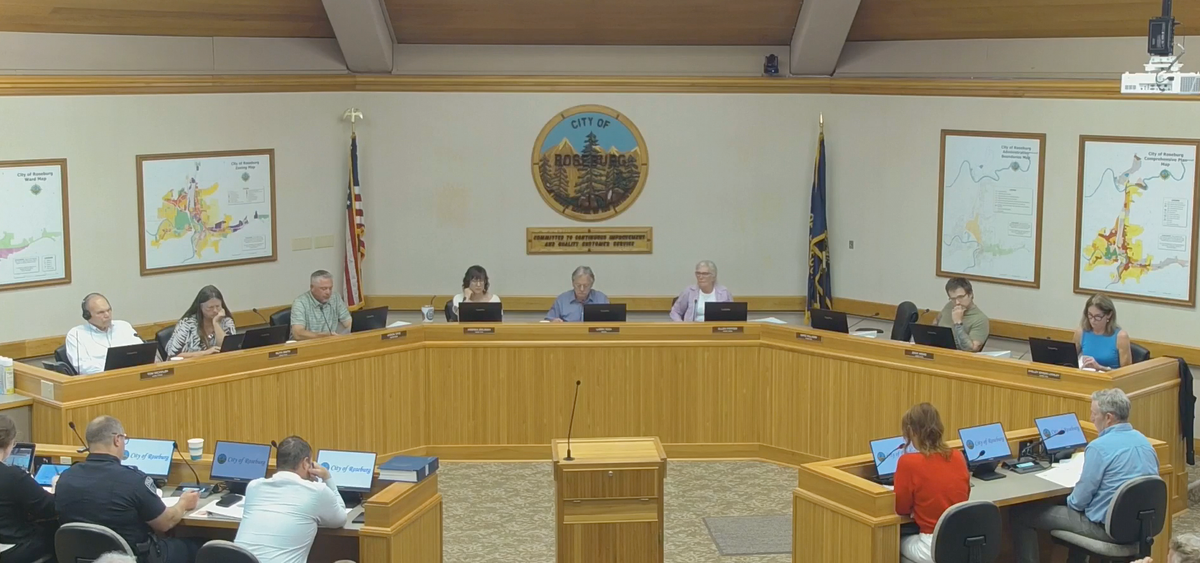
ROSEBURG, Ore. - The Roseburg City Council voted 5-2 Monday to reject a proposal that would have expanded the city’s requirements for authorized tent camping sites.
Resolution No. 2026-16 would have amended rules originally adopted by the council in 2022. The proposed changes included neighborhood notification, a public comment period, designated camp hosts, additional spacing requirements, access to drinking water and two-year operating permits.
Because the resolution failed, Roseburg’s existing tent camping rules will remain in place.
The rules apply to registered camping sites operated on property owned by nonprofit organizations, public agencies or commercial entities. They do not address unauthorized camping on sidewalks, in parks or on other public property.
According to the Roseburg City Council packet for the July 13 meeting, the proposed amendments were developed after requests to revisit the city’s existing program. The issue was first brought to the council in December 2024, with additional requests made in November 2025.
The Roseburg Homeless Commission reviewed the proposed changes and recommended forwarding them to the City Council. City staff also recommended approval.
Notification And Public Comment
One of the most significant proposed changes would have required the city to notify property owners within 200 feet of a proposed tent camping site.
The proposal would have required:
- Notification of property owners within 200 feet of a proposed site
- A public comment period of at least 14 days
- Additional administrative review for sites proposed within 200 feet of a residential zone
- Compliance with any additional conditions imposed by the city to address neighborhood compatibility
Tent camping would have remained prohibited within residential zones, except on church-owned property already located in a residential area.
Applicants also would have been required to have:
- No outstanding city code violations
- No outstanding municipal violations
- No unpaid city liens
- No delinquent property taxes
Property taxes would have needed to remain current while a site was operating.
Designated Camp Hosts
The proposed rules would have replaced the existing requirement for an on-site staff member or volunteer with a more clearly defined camp host position.
Each site would have been required to designate a camp host who was at least 18 years old and identified to the city in writing.
The camp host would have been responsible for:
- Supervising the site
- Enforcing the city’s camping rules
- Serving as the city’s primary contact
- Maintaining a current telephone number
- Denying entry or requiring compliance when necessary
Camp hosts would have been required to remain at the site during the following overnight hours:
- November through February: 5 p.m. to 8 a.m.
- March and October: 6 p.m. to 8 a.m.
- April through September: 8 p.m. to 8 a.m.
The camp host also would have counted toward the site’s maximum occupancy.
Another provision would have prohibited property owners and camp hosts from requiring residents to perform labor as a condition of staying at the site.
Tent Limits And Spacing
The city’s existing rules limit each registered site to no more than 10 tents or approved structures.
The proposed amendments would have retained that limit while specifying that it applied across adjoining parcels. That provision would have prevented an operator from treating connected properties as separate camps to increase the number of tents.
The proposed site requirements included:
- At least 400 square feet of site space for each tent
- At least four feet between tents
- At least 10 feet between tents and property lines
- No more than 10 tents or approved structures across contiguous parcels
The amendments also would have allowed raised platforms up to 12 inches high. Those platforms could have been used to keep tents above wet or muddy ground.
Water, Restrooms And Sanitation
The proposal would have required operators to provide campers with access to potable water.
Other sanitation and operating requirements already contained in the city’s 2022 rules would have remained in place, including:
- At least two restrooms or portable toilets
- Adequate garbage service
- A six-foot privacy fence around the camping area
- Access for emergency vehicles
- Compliance with city noise regulations
- Storage of personal belongings inside a tent, approved structure or screened storage area
Open flames would have remained prohibited.
Operators would not have been allowed to charge residents a fee to camp, and residents would still have been limited to stays of no more than 29 consecutive days.
Two-Year Permits
The proposed amendments would have established two-year operating permits for registered tent camping sites, including locations already operating under the city’s existing rules.
Operators would have been required to apply for renewal before a permit expired. Continued approval would have depended on compliance with city requirements.
The city’s Community Development Department would have been responsible for overseeing compliance.
If violations were identified, the city could have:
- Imposed additional operating conditions
- Required corrective action
- Revoked the site’s approval
Operators would generally have been given 10 days after receiving written notice to correct violations before a permit was revoked.
The proposed appeal process would have allowed an operator to:
- Appeal a revocation to the city manager
- Appeal the city manager’s decision to the Roseburg City Council
The council’s decision would have been final.
Concerns About Additional Barriers
During the July 13 Roseburg City Council meeting, Councilor Zack Weiss expressed concern that the proposed amendments could create additional barriers for organizations attempting to operate managed camping sites.
The proposal added several layers of review and operating requirements, including:
- Neighborhood notification
- Public comment
- Designated camp hosts
- Property-tax compliance
- Increased site space
- Recurring permit renewals
Bernie Woodard of Elk Island Trading Group LLC also addressed the council during the public meeting.
Woodard had previously asked the city to reconsider portions of the tent camping program. Correspondence included in the Roseburg City Council packet discussed the possibility of raised platforms and other shelter options intended to protect campers from wet conditions.
The correspondence also raised questions about:
- Expanding camp capacity
- Serving additional people
- Creating a lower-barrier camping location at 0 Micelli Street
- Allowing raised platforms or alternative shelter structures
The proposed amendments would have allowed limited raised platforms but would have kept the maximum of 10 tents or approved structures at each site.
Existing Rules Remain In Place
City staff said the proposed amendments were intended to improve accountability, public safety, site oversight and compatibility with nearby properties.
Staff did not anticipate a significant direct financial impact to the city. Individual operators would have remained responsible for expenses involving sanitation, fencing, maintenance, water and other site requirements.
The council ultimately rejected Resolution No. 2026-16 by a 5-2 vote.
As a result, none of the proposed notification, camp-host, water-access, permitting or expanded enforcement provisions will take effect.
Registered tent camping sites in Roseburg will continue operating under the rules adopted by the City Council in 2022.
The City Council packet can be found here.
Comments ()