
Oregon Unemployment Insurance Tax Rates To Drop In 2027, Saving Employers Up To $172.7 Million
Oregon employers could save up to $172.7 million in 2027 as the state lowers Unemployment Insurance tax rates. The taxable wage base will increase, while Paid Leave Oregon's contribution rate remains unchanged at 1 percent.
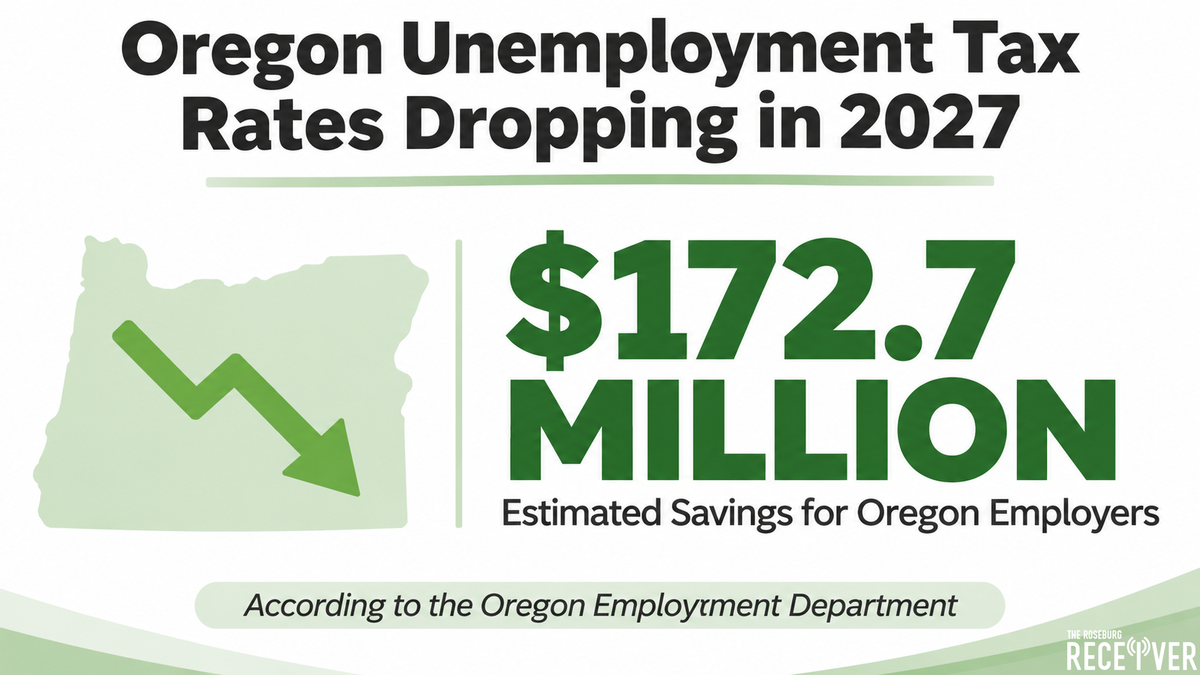
SALEM, Ore. - Oregon employers will see lower Unemployment Insurance tax rates in 2027, a change the Oregon Employment Department estimates could save businesses across the state up to $172.7 million.
The department announced Monday, November 16, that Oregon will move from Unemployment Insurance Tax Schedule 3 to Tax Schedule 2 next year. The change will lower the minimum tax rate and the base rate paid by new employers, although the amount of wages subject to the tax will increase.
Meanwhile, the contribution rate for Paid Leave Oregon will remain at 1 percent, but the maximum amount of employee wages subject to those contributions will also rise.
What Is Changing For Employers?
Oregon uses a system of tax schedules to determine how much employers pay into the state's Unemployment Insurance program. The rates are established through a formula under state law, with individual employer rates influenced in part by their history of unemployment claims.
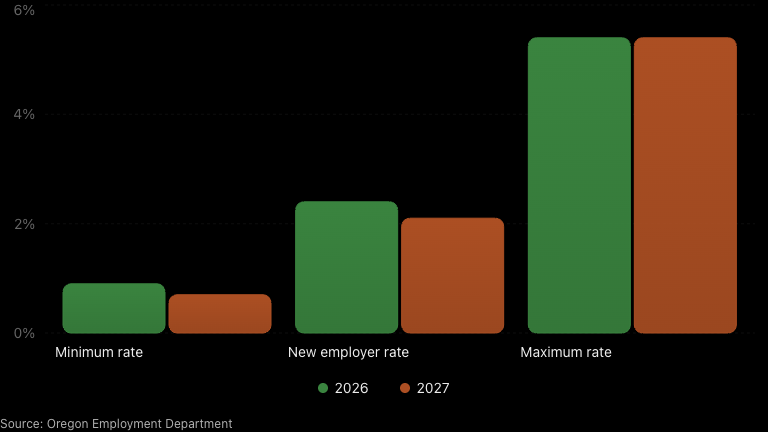
The move to Tax Schedule 2 means lower rates for some employers in 2027. The minimum rate will decrease from 0.9 percent to 0.7 percent, while the maximum rate will remain at 5.4 percent.
For new businesses without an established payroll history, the base tax rate will fall from 2.4 percent to 2.1 percent.
The following table compares the statewide rates for 2026 and 2027.
Unemployment Insurance | 2026 | 2027 |
|---|---|---|
Tax schedule | 3 | 2 |
Minimum tax rate | 0.9% | 0.7% |
Maximum tax rate | 5.4% | 5.4% |
New employer base rate | 2.4% | 2.1% |
Taxable wage base | $56,700 | $58,600 |
While rates are decreasing, the taxable wage base is moving in the opposite direction.
In 2026, employers pay Unemployment Insurance taxes on the first $56,700 in wages paid to each employee. That amount will increase to $58,600 in 2027, a rise of $1,900, or approximately 3.3 percent.
The department said the wage base is adjusted using a formula tied to Oregon's annual average wage, which generally increases over time.
Because tax rates vary by employer and the taxable wage base is increasing, the changes will not affect every business equally.
Most employers pay Unemployment Insurance payroll taxes into a state trust fund used to provide benefits to eligible workers who lose their jobs. Employees do not pay directly into Oregon's Unemployment Insurance program.
Paid Leave Oregon Rate Remains Unchanged
The contribution rate for Paid Leave Oregon will stay at 1 percent in 2027.
The program is funded through contributions from employees and qualifying employers. Employees generally pay 60 percent of the total contribution, while employers with 25 or more employees pay the remaining 40 percent.
Although the contribution percentage is staying the same, the amount of wages subject to contributions will increase.
Paid Leave Oregon | 2026 | 2027 |
|---|---|---|
Total contribution rate | 1% | 1% |
Employee share | 0.6% | 0.6% |
Employer share (25+ employees) | 0.4% | 0.4% |
Maximum wages subject to contributions | $184,500 | $192,300 |
The wage limit will increase by $7,800, or approximately 4.2 percent, in 2027. The limit is tied to the federal Social Security taxable wage maximum.
For employees whose wages exceed the contribution limit, that change means a larger portion of their annual earnings will be subject to Paid Leave contributions.
The Paid Leave Oregon Trust Fund pays benefits to eligible workers taking qualifying family, medical or safe leave and covers the program's administrative costs.
Employers Can Review Their 2027 Rates
The Oregon Employment Department said it has mailed annual rate notices to employers. Individual 2027 rates are also available through the state's Frances Online system.
Employment Department Director Andrew R. Stolfi said the reduction in Unemployment Insurance taxes comes as businesses continue to face economic challenges.
“Considering the continuing economic strain and uncertainty facing Oregon businesses, we are glad to see the Unemployment Insurance payroll tax decrease,” Stolfi said.
The department said its Contributions and Recovery Division is available to help employers with payroll reporting, Unemployment Insurance taxes and Paid Leave Oregon contributions.
Employers can find their individual rates through Frances Online and review statewide tax information at the Oregon Employment Department's website.
The Numbers At A Glance
Unemployment Insurance tax rates, 2026 vs. 2027



Comments ()