
Douglas ESD Program Expands Mental Health Support for Students Across County
Douglas ESD’s School-Based Mental Health program expanded student access to care across Douglas County while helping train local mental health providers through school placements and graduate partnerships.
ROSEBURG, Ore. — A Douglas Education Service District program helped bring mental health support directly into schools across Douglas County, connecting students with care while also training a new group of local providers.
The School-Based Mental Health program began in January 2023 with federal funding through the U.S. Department of Education’s School-Based Mental Health Services Grant program. The effort was created to address two connected challenges in rural communities: growing student mental health needs and a shortage of available providers.
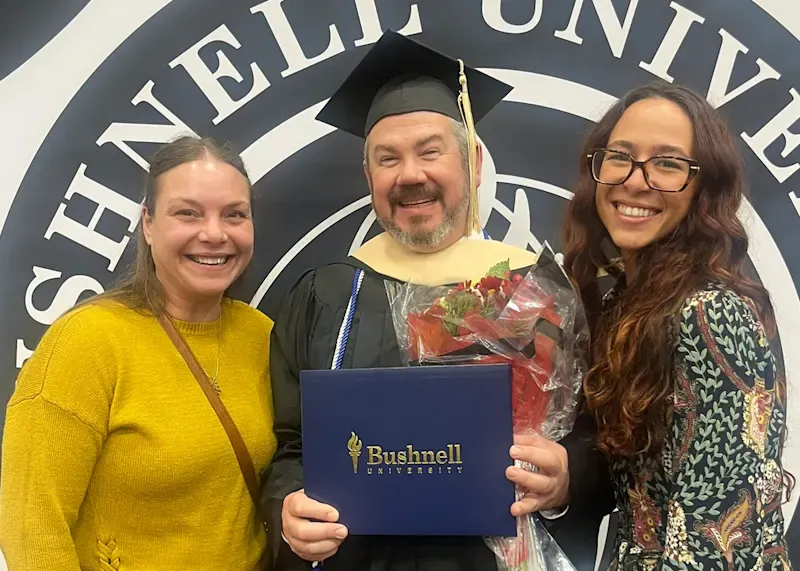
Douglas ESD partnered with Bushnell University to place graduate-level counseling students in local K–12 schools while they completed their training. The interns were employed by Douglas ESD and served in school districts throughout the county, giving students more access to support during the school day.
The program also helped reduce barriers for people pursuing mental health careers. Tuition and program fees were covered through the grant, and Bushnell offered evening classes locally at Umpqua Community College. UCC donated classroom space and technology support, while Bushnell used a hybrid format that allowed students to complete graduate coursework without leaving the region.
The project was led through Douglas ESD’s Behavioral Health Services Program. Tiana Oaks, assistant director of Behavioral Health Services, helped guide collaboration with districts and regional partners. Cati Adkins, school-based mental health grant manager and project director, helped develop the grant and supported the program as an academic liaison.
Interns served students in all 13 Douglas County school districts. Their work included one-on-one mental health support, emotional regulation help, relationship-building, social-emotional skill development, early intervention, crisis response and other student support services.
By placing providers in schools, the program made it easier for students to receive help sooner. It also strengthened communication between educators, counselors, administrators, families and community partners.
Program data shows the effort reached a large number of students during its grant period. About one in eight students in Douglas County schools received individual support through the program. In total, 1,572 students participated in individual sessions, while 2,287 additional students took part in group support and prevention activities.
Interns provided more than 13,500 hours of one-on-one care, which Douglas ESD said equals about 1,695 full school days of support. They also assisted with Behavioral Safety Assessment Teams, suicide screenings, crisis response and other school-based needs.
The program also helped build a local workforce pipeline. Evaluation data showed that 13 of 14 responding interns are still working in mental health or a related field, with many serving children, youth and families in Douglas County and nearby rural communities.
“This project demonstrated the importance of bringing behavioral health support directly into schools while investing in the development of local providers who understand the strengths and needs of rural communities,” Oaks said. “Students benefited from increased access to care, and our region gained new professionals committed to serving children and families close to home.”
An independent evaluation by the Rede Group found the program is expected to have a significant long-term community impact. Based on national research, evaluators estimated the project could generate more than $75 million in long-term community benefit.
While the grant-funded project has ended, Douglas ESD said the need for student mental health support remains. Districts no longer have the same level of access to onsite school-based mental health services that was available during the program.
Douglas ESD and regional partners are continuing work to strengthen referral pathways between schools, families, behavioral health providers and community organizations. Project leaders said one of the biggest takeaways was the importance of local partnerships and training models that allow rural communities to grow their own provider workforce.
The School-Based Mental Health cohort included graduate students serving schools across Douglas County. Most were enrolled in Bushnell University’s Clinical Mental Health Counseling master’s program, while one participated through Oregon State University’s school counseling program with a clinical mental health emphasis.
The 2025 Bushnell Clinical Mental Health Counseling graduates included Alexa Parks, Allen Sjogren, Autumn Mann, Calie Mitchell, Elizabeth Payne, Haley McGee, Isabella Mast, Jonathon Williams, Marcus Vela, Summer Fry and Lloyd Durbin.
Beau Shelby and Taryn Terhune at Bushnell University, along with Courtney Hallgrimson at Oregon State University, completed their Douglas ESD internships and are continuing work toward their degree programs.
Douglas ESD thanked the school districts, college partners, clinical supervisors, behavioral health organizations and community partners who helped carry out the project.



Comments ()