
Western Oregon Deer Season Opens Oct. 3; Hunters Asked to Submit CWD Samples
Western Oregon’s general deer season opens Oct. 3 and runs through Nov. 6. Douglas County hunters must purchase tags by Oct. 2 and are encouraged to submit samples from harvested deer and elk to help ODFW monitor for chronic wasting disease.
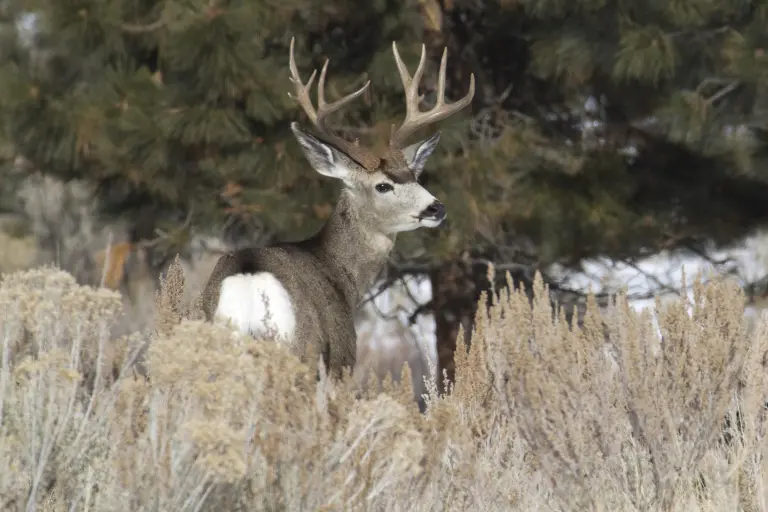
With western Oregon’s general deer season opening Saturday, Oct. 3, Douglas County hunters are being asked to submit samples from harvested deer and elk to help wildlife officials monitor for chronic wasting disease.
The general Any Legal Weapon buck deer season runs through Nov. 6. Hunters must purchase their General Any Legal Weapon Western Oregon deer tag by Friday, Oct. 2. The bag limit is one buck with a visible antler.
The Oregon Department of Fish and Wildlife is expanding CWD monitoring this fall. The disease has been detected in neighboring Idaho, Washington, and California, but has not been found in Oregon.
“Positive detections in nearby states are very concerning,” said Ashley Reeder, ODFW’s CWD surveillance coordinator. “Early detection is our best tool in reducing the disease’s impact on Oregon’s deer, elk, and moose populations.”
How Douglas County Hunters Can Submit a Sample
None of the highway check stations listed in ODFW’s announcement are in Douglas County, but hunters have other ways to submit an animal for testing.
Options include:
- Visiting a participating taxidermist or meat processor.
- Making an appointment at an ODFW office that collects samples.
- Dropping off the animal’s head in an after-hours collection bin at a participating ODFW office.
Hunters should check ODFW’s sampling information and locations before making a trip. Sample collection generally takes about 10 minutes and involves removing lymph nodes and recording information from the hunter.
ODFW asks all successful deer and elk hunters to submit a sample. Each sample submitted between Aug. 1, 2026, and March 31, 2027, earns the hunter one entry into a drawing for a Howa 1500 .223-caliber rifle provided by the Oregon Hunters Association.
“With CWD detected in almost every bordering state, it is more imperative than ever for hunters to provide our unique contribution toward CWD detection and surveillance by voluntarily submitting samples from our harvested deer and elk,” said Tyler Dungannon, the association’s conservation director.
Hunters Must Stop at Check Stations
Hunters traveling elsewhere in Oregon should watch for highway signs marking CWD check stations. Anyone transporting harvested deer or elk must stop if they pass an operating station.
ODFW plans to operate stations during deer and elk seasons at locations including Celilo Park, Prineville, Elgin, Riley, Aurora, Ukiah, and Buxton. Dates and hours vary by location and season.
The agency said station information may change and additional locations could be added. Hunters can visit ODFW’s CWD page for current information and sampling options.
Why Testing Matters
CWD is fatal to deer, elk, and moose, and there is no cure. It spreads through direct contact with infected animals or through contaminated environments. The misfolded proteins that cause the disease, known as prions, can remain in the environment for years.
ODFW said it has monitored Oregon’s herds for more than two decades, testing more than 40,000 samples from hunter-harvested, road-killed, and other deceased animals without detecting a case.
A new testing facility at Oregon State University’s Veterinary Diagnostic Laboratory in Corvallis is expected to reduce the time hunters wait for results and help the state respond more quickly if CWD is detected. The facility was supported through a combination of state funding and U.S. Department of Agriculture grants.
Getting Results
Hunters whose animals test positive will be contacted directly by a biologist or veterinarian. Results are also available on ODFW’s CWD testing results page, where hunters can search using their ODFW ID number or roadkill salvage permit confirmation number.
According to ODFW’s release, there is currently no evidence that people can become infected with CWD by consuming or touching infected animals. However, the Centers for Disease Control and Prevention advises against eating meat from infected animals and recommends precautions when handling and processing harvested animals.
Additional Opportunity for Youth Hunters
Eligible hunters ages 12-17 with an unfilled General Any Legal Weapon Western Oregon deer tag or an unfilled West High Cascade controlled hunt tag may also hunt Nov. 7-8 within the western Oregon general buck deer season area.
The extension requires hunters to have their own qualifying tag and does not apply to participants in the Mentored Youth Hunt Program. The bag limit remains one buck with a visible antler.

Comments ()