
Roseburg Council Debates Flock Cameras; Temporary Suspension Motion Gets No Second
Roseburg councilors debated Flock cameras Monday, raising questions about privacy, security, and police use. Zack Weiss’s motion to consider a temporary suspension received no second. The council voted 6-2 to revisit the issue with more information.
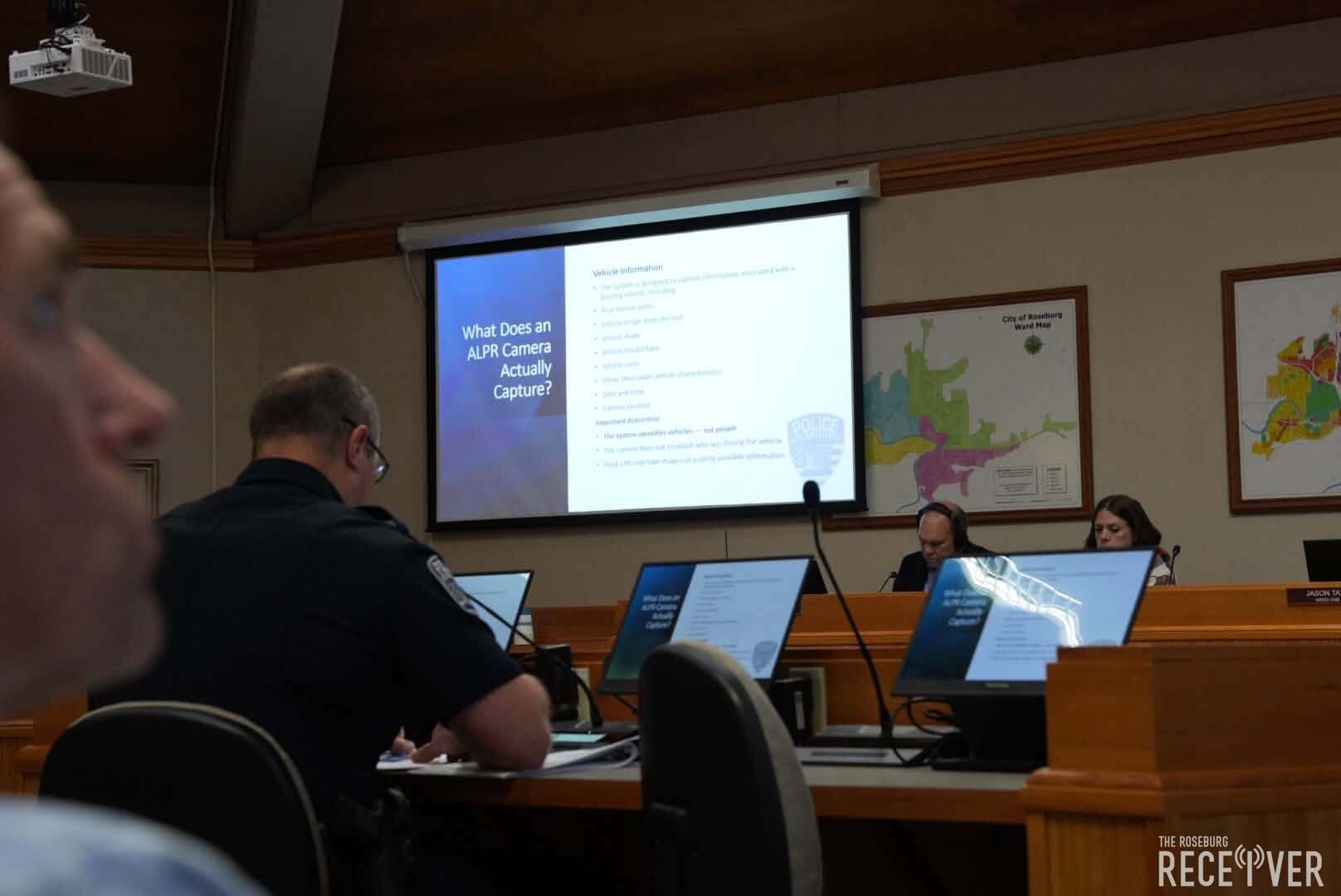
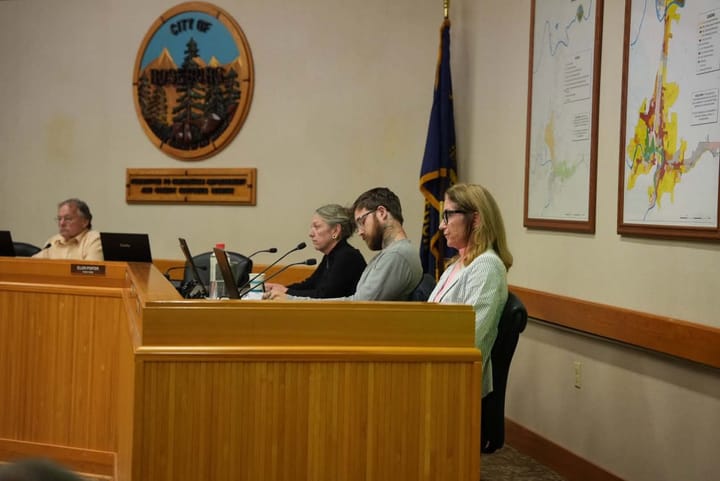
ROSEBURG, Ore. - Questions about privacy, cybersecurity, and police use of Roseburg’s Flock cameras led to a lengthy City Council discussion Monday night, but a proposal to temporarily suspend the camera contracts while councilors gathered more information received no second.
Councilor Zack Weiss made the motion after Police Chief Gary Klopfenstein’s presentation and public testimony. He proposed having the council consider temporarily suspending the contracts until more information was available. No other councilor seconded it, so the motion died without a vote.
The council later voted 6-2 to approve Councilor Ellen Porter’s motion to revisit Flock at the next meeting, request additional information from Klopfenstein, and continue the discussion. The next regular meeting is scheduled for October 26.
The cameras remain in use. Neither motion called for renewing the contract, and the council did not approve a suspension or cancellation.
Police Outline the System’s Role
Klopfenstein told councilors that Flock gives a short-staffed department investigative leads in cases involving stolen vehicles, burglaries, shootings, and missing or endangered people.
Roseburg has 15 fixed automatic license plate recognition cameras along routes entering and leaving the city. The chief said they are not installed in neighborhoods. They photograph the rear of passing vehicles and record license plates, vehicle characteristics, the location, and the date and time.
He described two ways officers use the system. License plates are automatically checked against records that can generate alerts involving stolen vehicles, missing people, AMBER Alerts, and other specified categories. Officers can also search recorded vehicle information during criminal investigations or missing-person cases.
Alerts from the regional camera network go to Douglas County dispatch, which can send officers to look for a vehicle. Klopfenstein emphasized that an alert is an investigative lead. Officers still have to evaluate the information and establish legal grounds for a stop or other enforcement action.
The chief cited a December 2025 ATM theft as one example. He said camera information helped investigators identify a suspect vehicle, trace it to a rental agency near Portland International Airport, and obtain additional records through subpoenas that helped identify suspects from Houston, Texas.
An earlier ATM theft had stalled without sufficient leads, he said.
Klopfenstein also described two burglaries at J&J Market in which officers found the same vehicle passing cameras near Southgate around the time of both incidents. That information led investigators to the vehicle’s owner and ultimately to a driver who confessed, according to the chief.
Other examples included a Highland Street shooting investigation, a Hometown Drug burglary, and the recovery of a stolen utility trailer. He also discussed missing-person and kidnapping investigations, including a 14-year-old girl located in Washington and an elderly kidnapping victim found in Roseburg.
His argument for retaining the cameras centered on their ability to give investigators another lead when other avenues have been exhausted.
Questions About Access, Storage, and Oversight
Much of the council’s questioning focused on what happens to the information after a camera records it.
Klopfenstein said access is limited to authorized police department personnel and community resource officers, with multifactor authentication required. Searches must be connected to a criminal investigation or missing-person case and require a police report number or dispatch incident number.
The system records who conducted a search, when it occurred, what was searched, and the stated reason. The chief said he conducts monthly audits, that the department has had no misuse of the system, and that misuse could result in discipline up to termination.
He described Oregon Senate Bill 1516 as setting requirements for use, retention, sharing, and auditing. The agenda packet states that the law generally limits retention to 30 days, with exceptions for information related to an ongoing criminal investigation or court proceeding.
Porter asked whether information deleted from the main system could remain in a backup. Weiss raised a similar question about cloud storage and how the city could confirm that no additional copies were retained.
Klopfenstein said the department’s understanding of deletion was based on Flock’s representations and applicable requirements.
Weiss also questioned the chief’s comparison between Flock’s security and the security of police computers. He asked whether that comparison accounted for differences between locally stored information and data held by a cloud provider.
Klopfenstein pointed to criminal justice security requirements as the basis for his comparison, while acknowledging that he did not know all the details of the cloud infrastructure.
The discussion also covered whether software updates could expand the cameras’ capabilities. Weiss questioned whether equipment purchased for one purpose could later detect or record other information through changes to its software.
Porter asked whether Roseburg’s cameras could photograph people or record video. Klopfenstein said the system focuses on vehicles and license plates. He said Flock had offered video-capable cameras, but he declined to add them.
Porter suggested the city could consider putting some limits into an ordinance so those protections would extend beyond decisions made by an individual police chief.
Data Sharing and Privacy Remain Points of Disagreement
Klopfenstein said Roseburg currently shares its camera information with 22 Oregon agencies and does not provide routine access to federal agencies, out-of-state agencies, or private entities.
Assistance outside that network requires specific administrative approval and documentation, he said. He also said the system cannot be used for immigration or reproductive-care searches.
Porter wanted more information about which agencies might leave the network when their contracts expire. She questioned whether a list of current sharing partners gives the council a clear picture of the system’s future regional usefulness.
The chief said he knew which agencies currently shared with Roseburg but did not know every agency’s contract plans. He said Winston was considering leaving for budget reasons, although its cameras remained functioning, and that Douglas County’s cameras were also functioning.
At Porter’s request, Klopfenstein agreed to try to obtain more information from Flock about agencies planning to discontinue the service.
Weiss challenged whether the presentation gave councilors enough information about concerns beyond the cameras’ usefulness to police. He argued that the council needed to examine potential consequences alongside examples of successful investigations.
Klopfenstein said residents he had spoken with generally supported the cameras as a public safety tool. Weiss responded that the objections he had heard extended beyond the Fourth Amendment concerns addressed in the presentation.
The chief cited a Ninth Circuit decision concerning the lack of a reasonable expectation of privacy in a publicly visible license plate. Several public speakers questioned whether that addresses the broader issue of collecting vehicle movements and making them searchable over time.
Police described the cameras as recording information an officer could observe on a public road. Opponents argued that compiling those observations into a database creates a different level of surveillance, including records of people who were not suspected of a crime when their vehicles were photographed.
Residents Urge Removal or Stronger Safeguards
Several public commenters urged the city to end its use of Flock. Their concerns included the collection of innocent drivers’ movements, misuse of access, inaccurate alerts, cybersecurity, and the city’s ability to oversee a private company handling the information.
Speakers cited incidents and reporting from other jurisdictions to question whether Roseburg’s restrictions adequately protect residents. Some argued that local rules would not fully address risks elsewhere in the system.
One commenter read correspondence attributed to U.S. Sen. Ron Wyden concerning privacy protections, access to Oregon data, and cybersecurity. Porter requested a copy for council review.
She also asked another speaker to submit written technical information so it could be distributed to councilors.
Andrew Green, speaking remotely, supported using the technology with stronger safeguards. He discussed restrictions on historical searches, short retention periods, independent audits, public reporting, and consequences for misuse.
The meeting did not settle the competing legal and technical claims raised by police, councilors, and public speakers.
Council Agrees to Continue the Discussion
After Weiss’s temporary suspension proposal received no second, Porter asked that Flock return to the agenda. Following a brief procedural exchange, she formally moved to bring it back at the next meeting and request additional information from the chief.
Councilor Shelley Briggs Loosley urged councilors to provide specific questions, noting that Klopfenstein is handling two jobs. Mayor Larry Rich stressed that information presented to the council needs to be checked for accuracy.
Weiss agreed, saying that expectation should also apply to technical claims in the department’s presentation. Porter suggested inviting a Flock representative to answer questions about the equipment, software updates, and optional features.
Her motion passed 6-2.
According to the agenda packet, Roseburg’s current two-year contract costs $75,000 and expires February 20, 2028. Klopfenstein told councilors that Flock had advised him the city would remain responsible for contractual payments even if it stopped using the cameras.
The council will revisit the issue with additional information. Weiss’s proposed temporary pause did not advance to a vote.


Comments ()