
Roseburg Council Agrees To Discuss Recurring Homelessness Agenda Item
Roseburg councilors agreed to discuss whether homelessness should become a standing agenda item at their next meeting, following a motion by Zack Weiss. No recurring schedule has been adopted.
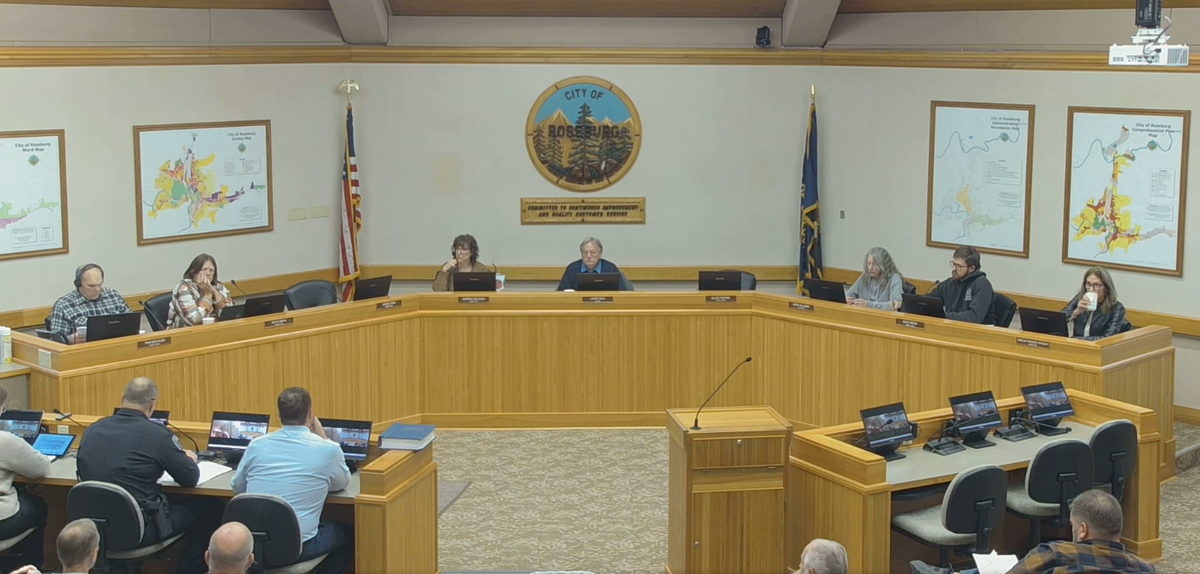
ROSEBURG, Ore. - The Roseburg City Council agreed Monday to discuss at its next meeting whether homelessness should become a standing agenda item, following a motion by Councilor Zack Weiss.
Weiss advocated addressing homelessness at every council meeting, but Monday’s vote only scheduled a discussion of that proposal. Council has not yet approved adding it to every agenda.
The discussion is set to return at the next regular meeting, scheduled for Nov. 9.
Weiss raised the issue near the end of Monday’s meeting after questioning why a discussion about the Homeless Commission’s future had been scheduled for January.
The agenda packet’s tentative schedule listed “Homeless Commission Modifications or Dissolution” for Jan. 11, 2027. A separate work study on urban campground options remained unscheduled.
Pointing to council’s earlier agreement to discuss changes to the commission, Weiss asked whether the timing was intended to leave the decision to the incoming council.
Mayor Larry Rich defended that approach. With a substantial change in council membership approaching, he said the incoming members should help determine how they want to operate.
Rich said he did not want the outgoing council to establish an approach that its successors might immediately replace. He argued that the people responsible for carrying out those decisions should have a chance to shape them.
Weiss objected, saying that reasoning overlooked the councilors who would remain in office and delayed work on an issue that needed attention regardless of who was serving.
He argued that homelessness should appear on every council agenda for the foreseeable future.
Councilor Ellen Porter seconded his motion to have council discuss that proposal.
During the exchange, the scope of the motion was clarified: Council was being asked to schedule a conversation about a recurring agenda item, rather than establish one that evening.
“My motion was to have a discussion about putting it on every single agenda,” Weiss said.
Weiss expressed frustration with the lack of progress he had seen during his time on council. He said long gaps between discussions made it difficult to develop ideas and maintain momentum.
Regular attention, he argued, could help council identify options, work toward solutions and keep the public informed.
Porter supported the proposal and questioned why council would wait for incoming members to address the Homeless Commission while continuing to make decisions about Flock cameras and other matters before the end of the year.
She described homelessness as a major community issue that deserved a place on every agenda and expressed frustration with what she viewed as years of limited progress.
Councilor Andrea Zielinski raised questions about how a recurring item would work and what staff would need to prepare.
She said staff would need direction about the subjects council wanted to address. An open-ended discussion, she cautioned, could make it difficult to know what information or proposals to bring forward.
Weiss said those details could be worked out when council discussed the proposal. He envisioned some meetings involving specific ideas and others providing updates, without requiring the subject to dominate every meeting.
Rich also cautioned that regularly listing a subject on the agenda does not necessarily produce results.
He pointed to an earlier effort to provide recurring downtown parking updates that he felt had not resolved the underlying problem. He urged councilors to identify a purpose and direction for the homelessness discussions.
Porter argued that an initial conversation could help establish those goals. Councilors needed an opportunity to exchange ideas, identify concerns and determine what work they wanted to pursue, she said.
The debate followed concerns raised during the meeting about people living outside as winter approaches.
Council comments described people at the Point with serious medical conditions and disabilities who may need assisted living, adult foster care or other support beyond what an outdoor camp can provide.
Concerns were also raised about repeated camp cleanups and the difficulty of packing up belongings and relocating, sometimes only to move again soon afterward.
Weiss suggested those moments could provide an opportunity to connect people with services. He said he had not seen service organizations at the cleanups he had attended and suggested the city could help coordinate outreach.
Earlier in public comment, mayoral candidate Max Smoot urged council to address conditions facing people living outside before winter. He called for basic amenities and an end to camp sweeps, arguing that repeated displacement was making conditions worse.
Council ultimately approved bringing Weiss’s proposal back for discussion at the next meeting. The decision on making homelessness a standing agenda item remains ahead.



Comments ()