
Nation Moves To Highest Wildfire Preparedness Level As Resources Are Stretched
The United States has moved to National Preparedness Level 5, the highest wildfire readiness level, as crews, aircraft and equipment are heavily committed. Oregon currently has 28 large fires, adding pressure to available resources.
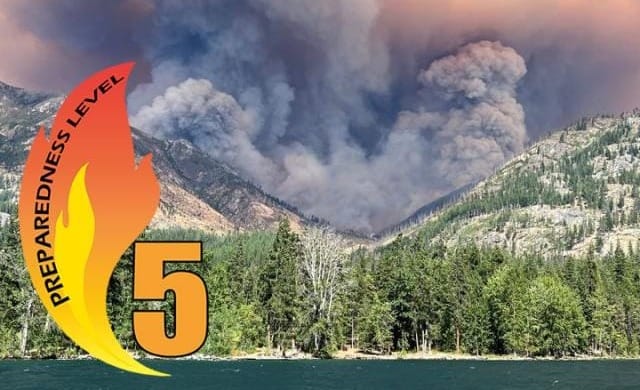
ROSEBURG, Ore. - The United States moved to National Preparedness Level 5 on Saturday as widespread wildfire activity placed heavy demand on crews, aircraft and equipment across the country.
Preparedness Level 5, commonly called PL5, is the highest level on the national wildfire preparedness scale. The National Interagency Fire Center said the change took effect at 7:30 a.m. Mountain Time on July 18.
The decision was based on the number of active fires, the amount of equipment and personnel already committed and the number of geographic areas experiencing significant fire activity.
As of Saturday, firefighters were working to suppress and contain 73 large fires nationwide, including 17 newly reported large incidents. More than 17,600 firefighters and support personnel were assigned to wildfire operations, along with 374 crews, 1,081 engines and 139 helicopters.
Oregon accounted for 28 of the large fires listed by NIFC, more than any other state in Saturday’s national report. Washington had eight large fires, while Florida had seven.
What Does PL5 Mean?
National preparedness levels range from 1 to 5 and are used to manage wildfire resources across the country.
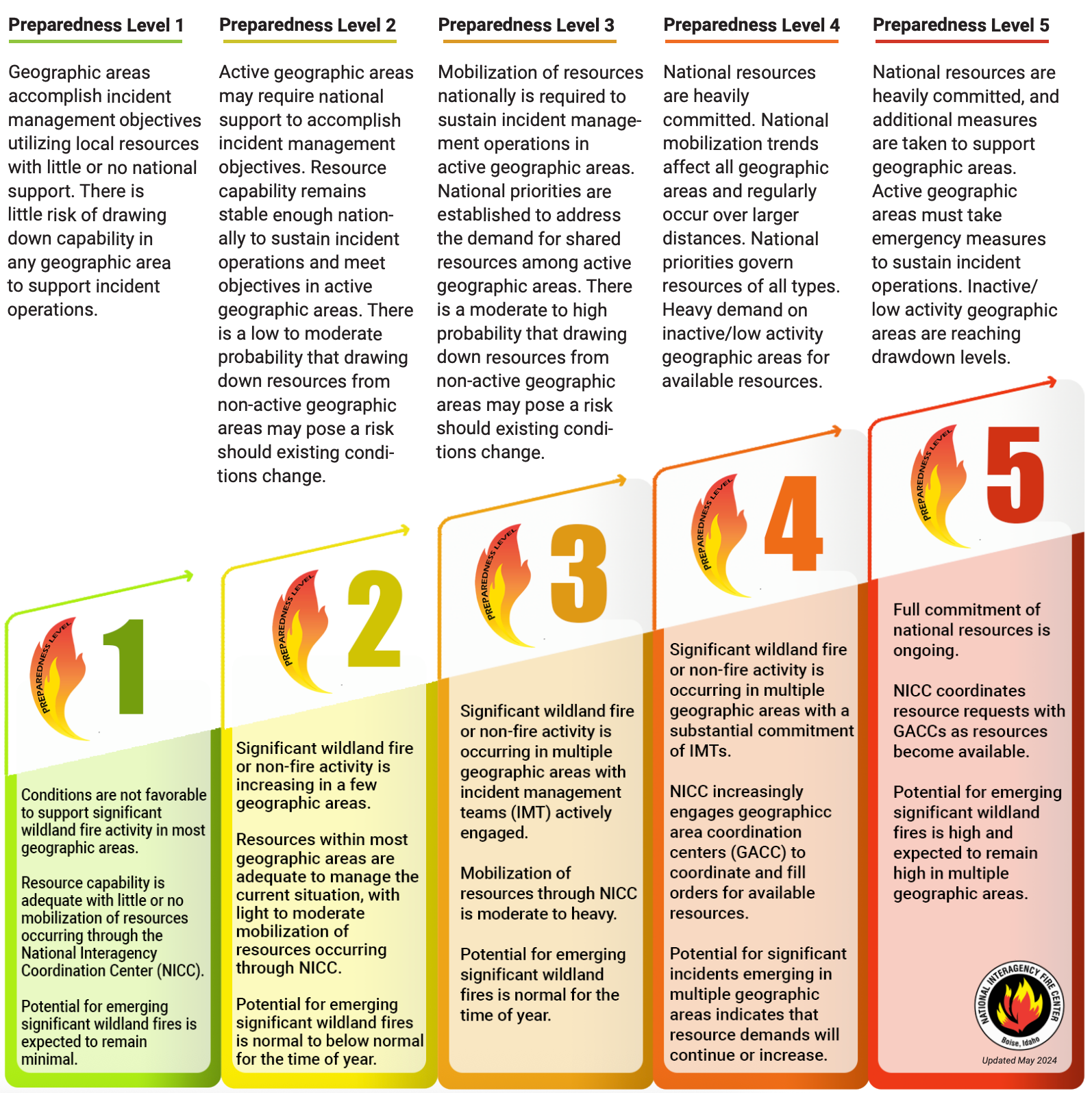
At PL5, national firefighting resources are heavily committed. Areas with active wildfires may need to take emergency measures to maintain operations, while areas with less fire activity may have already sent crews, aircraft and equipment elsewhere.
This means there may be fewer resources immediately available when new fires start. Requests for specialized crews, incident management teams, aircraft and other equipment are prioritized nationally based on threats to lives, communities, infrastructure and natural resources.
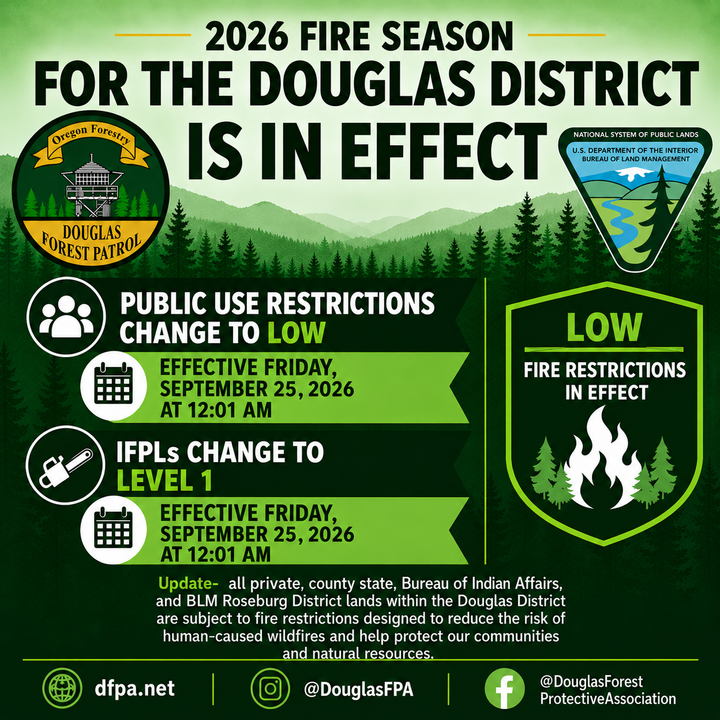
The PL5 designation does not mean every community is facing an immediate wildfire threat. It is also separate from local evacuation notices, public fire danger levels and restrictions issued by agencies such as the Douglas Forest Protective Association, Oregon Department of Forestry or local fire districts.
Instead, PL5 describes the overall strain on the country’s wildfire response system.
Additional Aircraft Sent To Oregon
Two military C-130 aircraft equipped with Modular Airborne Fire Fighting Systems have been deployed to Klamath Falls to support wildfire operations.
The aircraft, commonly known as MAFFS, can be used as large airtankers when civilian aircraft resources are heavily committed. Additional military aircraft have also been deployed to California to support firefighting operations nationally.
NIFC said a fuels and fire behavior advisory remains in effect for the Pacific Northwest. Hot, dry and breezy conditions were expected across the inland Northwest and Northern California, with downslope winds developing east of the Cascades.
Preventing New Fires Becomes More Important
NIFC said the 10-year average preparedness level for July is PL3, making wildfire activity in July 2026 higher than average.
With resources already stretched, officials are emphasizing the importance of preventing human-caused fires. A fire that might normally receive several aircraft or crews could face delays when those resources are committed to higher-priority incidents elsewhere.
Residents and visitors should follow current fire restrictions, fully extinguish campfires, avoid parking vehicles over dry vegetation and make sure trailer chains are not dragging on roadways.
Local evacuation notices and fire restrictions should still be monitored through the agency responsible for each area. PL5 alone does not create new restrictions or require residents to evacuate.
For more information, visit the National Interagency Fire Center website.


Comments ()