
Glide Fire Department Developing Community Emergency Radio Network
Glide Fire is developing a community emergency radio network using FRS and GMRS radios to keep neighborhoods connected when phones, internet and other communication systems fail.
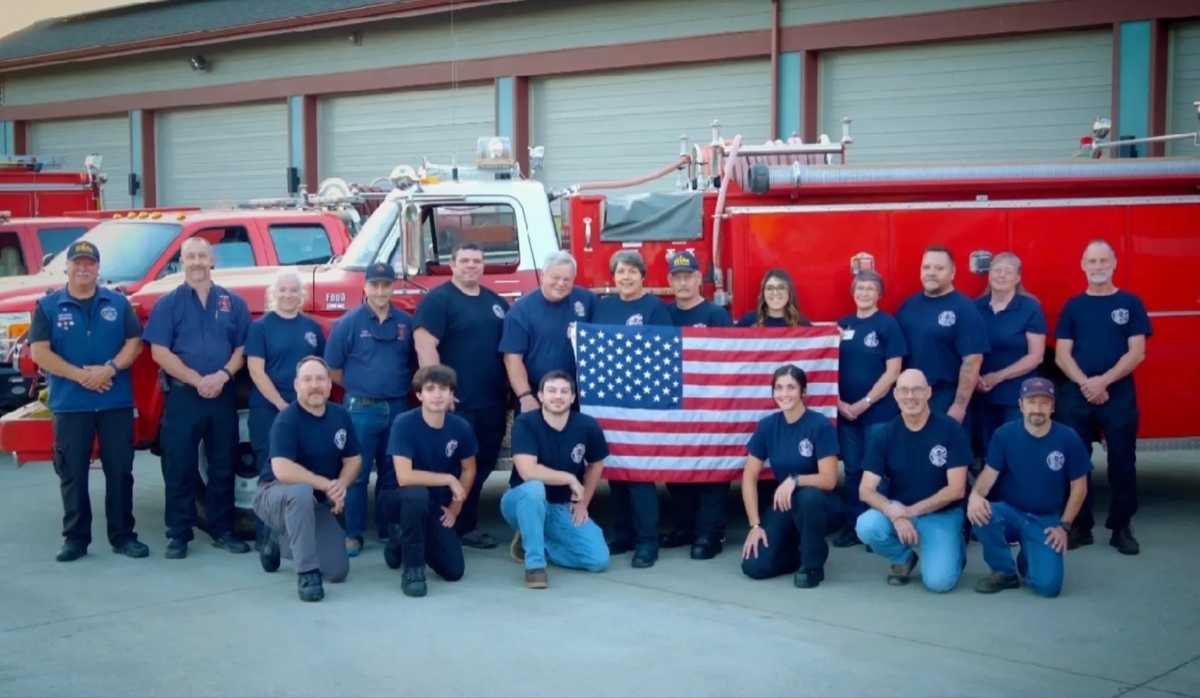
GLIDE, Ore. - The Glide Fire Department is working to build a community-based emergency communications network designed to keep neighborhoods connected when cell phones, internet service and other traditional communication systems are unavailable.
Over the next several months, the department plans to hold a series of public meetings as part of the Glide Community Emergency Communication Plan, or GCECP.
The goal is to have an emergency communications network in place by February 2027 that can be used during major disasters, including earthquakes, wildfires, severe winter storms and other events that could damage roads, electrical infrastructure and communication systems.
The plan was developed in response to concerns about widespread communication failures during emergencies. Glide-area residents experienced extended power and communication outages during the 2019 winter storm commonly referred to as "Snowmageddon" and during the 2020 Archie Creek Fire.
Officials also point to Cascadia Subduction Zone earthquake scenarios, which predict widespread damage to roads, utilities and communication infrastructure across western Oregon.
Under the plan, residents and neighborhood volunteers would use Family Radio Service, or FRS, and General Mobile Radio Service, or GMRS, radios to relay information from individual neighborhoods to the Glide Fire Department.
Neighborhood volunteers equipped with handheld radios could go door-to-door following a disaster, gather information about injuries, damage or other needs and report that information to a neighborhood assembly point.
Information from those locations would then be passed to neighborhood Net Control operators using GMRS radios.
The Net Control stations would communicate directly with a radio operator at the Glide Fire Department, referred to during exercises and emergencies as "Glide Base."
Glide Base would then relay information to Douglas County emergency officials, including 911 or the county's Emergency Operations Center, depending on the situation.
The system is intended to provide a backup when normal communication methods are unavailable, particularly in neighborhoods that could become isolated because of damaged bridges, blocked roads or other access problems.
The Glide Community Emergency Communication Plan divides the greater Glide area into six geographic sections: Glide Central, Glide North, Glide East, Glide South, Glide West and 138 East Canyon.
Those sections include 22 identified neighborhoods.
Officials currently anticipate consolidating those neighborhoods into approximately six neighborhood Net Control stations. Each station would use base radio equipment capable of communicating with Glide Base.
Neighborhoods will also identify Neighborhood Assembly Points, or NAPs, where residents could report during an emergency and where radio communication with the neighborhood's Net Control station would be available.
The locations could include homes, businesses or other suitable sites selected by individual communities.
Areas farther east along Highway 138 may require additional radio systems because of terrain and distance from the Glide Fire Department. The plan notes that amateur radio equipment could potentially be used in those areas to relay information.
Amateur radio, commonly called ham radio, is not formally part of the GCECP's FRS and GMRS network. However, the Glide Fire Department is separately working with licensed amateur radio operators.
The department plans to have licensed operators available to communicate with Douglas County Amateur Radio Emergency Service, or ARES, and other agencies using HF, VHF and UHF radio systems.
Glide Fire officials say the community communication system will be practiced several times each year through drills so residents and volunteers are familiar with the equipment and procedures before an actual emergency occurs.
Public meetings will be held at the Glide Fire Station for residents interested in participating in the program.
Specific meeting dates, times and agenda information will be announced through the Glide Fire Department's website, the Glide Rural Fire Protection District Facebook page and notices posted throughout the district.
More information about the Glide Community Emergency Communication Plan is available at glidefire.org.



Comments ()