
Fire Danger Raised To ‘Very High’ On Umpqua National Forest
Fire danger has increased to “very high” across the Umpqua National Forest as hotter, drier conditions settle in. Stage 2 restrictions remain in effect, limiting campfires, chainsaw use, off-road travel, smoking, welding and other activities.
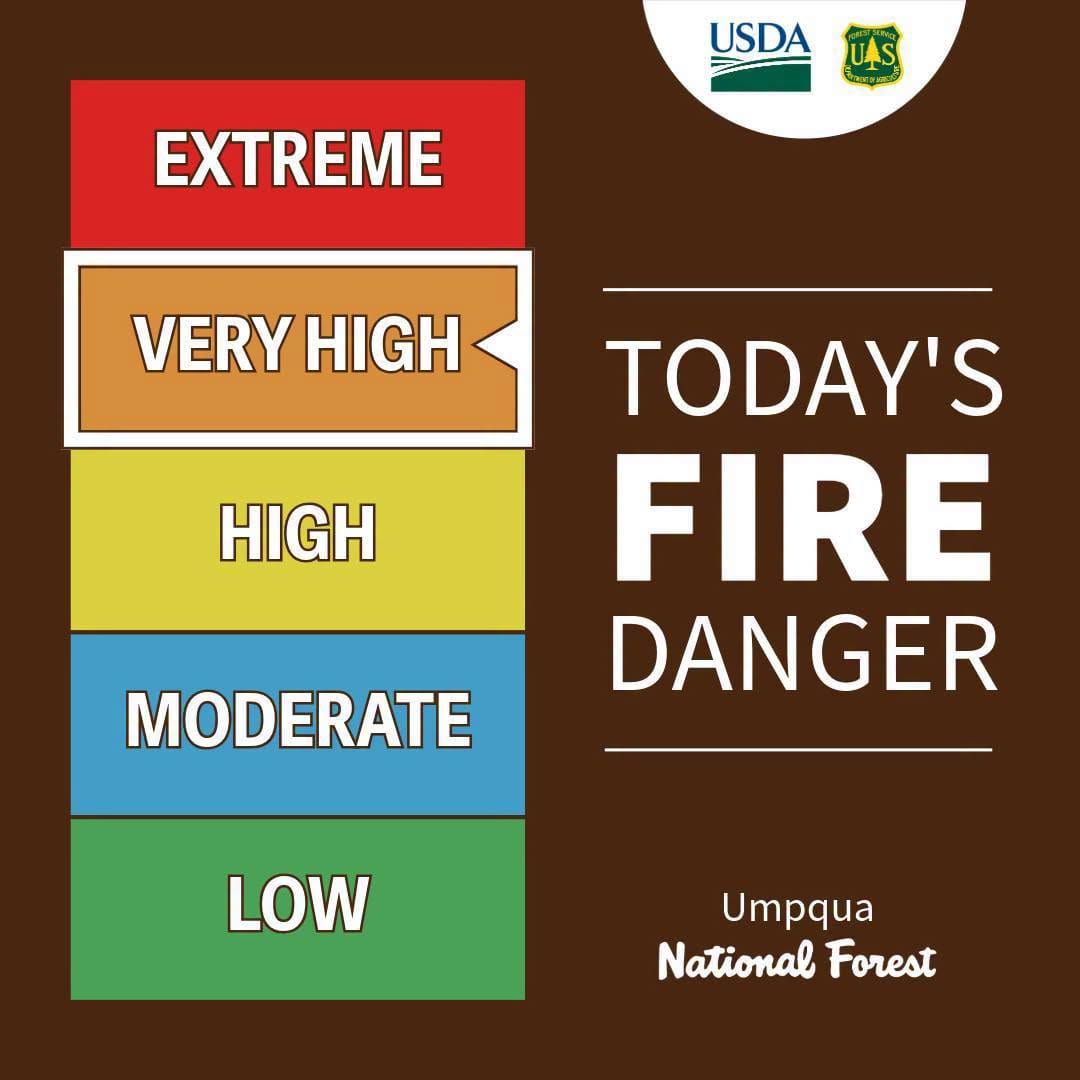
Fire danger has increased from “high” to “very high” across the Umpqua National Forest as temperatures rise and humidity levels continue to fall.
Forest officials said Stage 2 Public Use Restrictions and Industrial Fire Precaution Level 2 remain in effect. The restrictions are intended to reduce the risk of human-caused wildfires during increasingly dry conditions.
Under Stage 2 restrictions, campfires, charcoal fires, briquette fires, pellet fires and other open flames are prohibited outside of designated developed recreation sites.
An exemption allows campfires inside Forest Service-constructed concrete or metal fire rings at approved developed recreation areas. Propane campfires and other pressurized-fuel devices with an on-and-off switch are also permitted when used safely.
Campfires remain prohibited in wilderness areas.
Gas or propane cook stoves, lanterns and similar devices are allowed as long as surrounding flammable vegetation is cleared for at least three feet on all sides.
Additional Stage 2 restrictions include:
- Smoking is prohibited except inside an enclosed vehicle or building, or in an area cleared of flammable material for at least three feet.
- Chainsaw use and other internal combustion engine operations are prohibited.
- Motorized vehicles are limited to designated roads and trails.
- Off-road vehicle use is prohibited, except in areas free of vegetation within 10 feet of a roadway or when minimal travel over bare mineral soil is necessary to reach a dispersed campsite.
- Welding and the use of explosives are prohibited.
Officials reminded visitors that permitted campfires must be completely extinguished before leaving a campsite.
Campers should drown the fire with water, stir the ashes and carefully feel for remaining heat using the back of a hand. The fire should be cold to the touch before the site is left unattended.


Comments ()