
Douglas County Issues Emergency Drought Order
Douglas County commissioners approved an Emergency Drought Order, citing low streamflows, poor soil moisture, reduced snowpack, impacts to agriculture and livestock, and growing wildfire concerns. The county is seeking a state drought declaration.
Douglas County commissioners have approved an Emergency Drought Order, citing worsening drought conditions, low streamflows, poor soil moisture, reduced snowpack, and growing concerns for agriculture, livestock, water users, and wildfire danger.
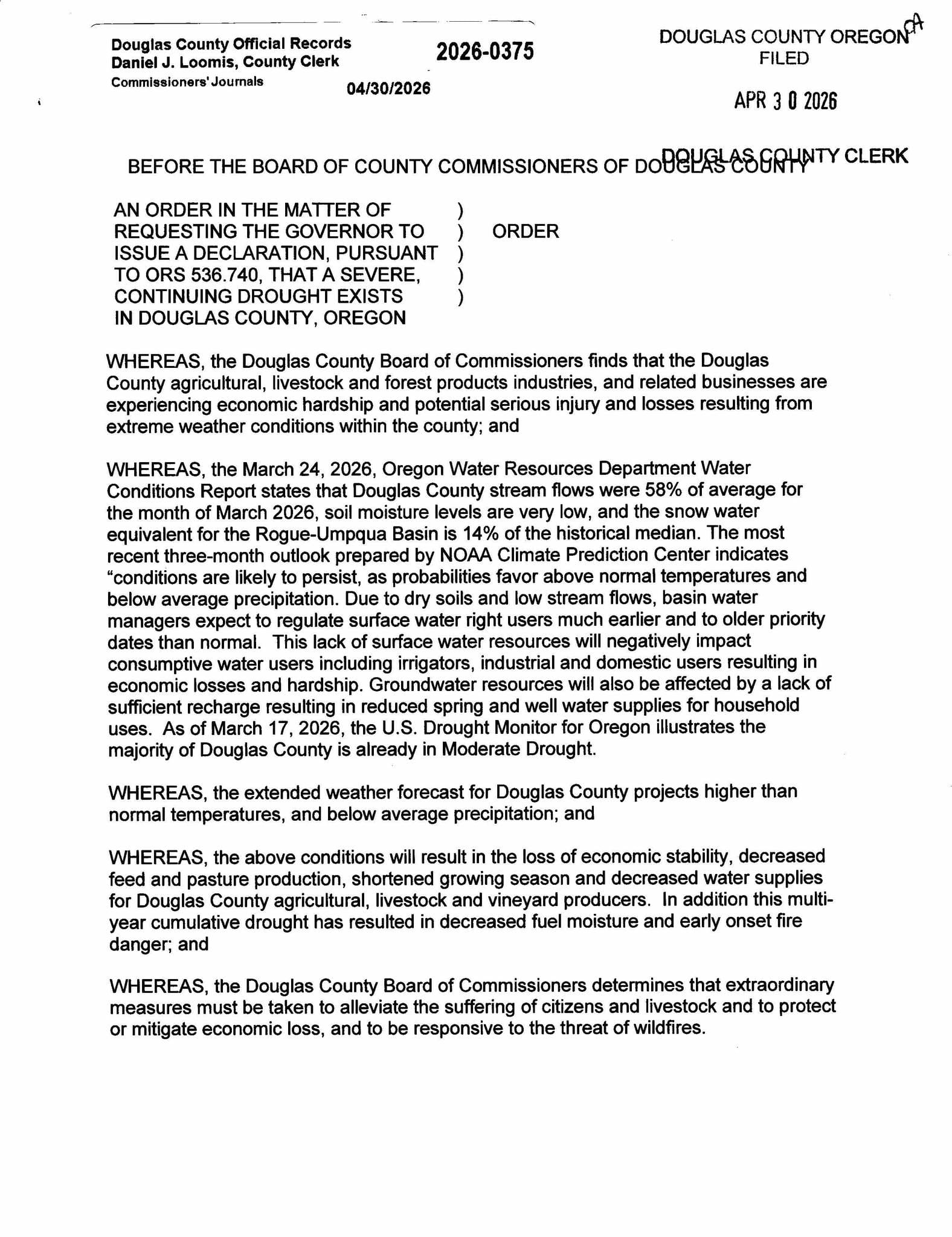
The order was requested Wednesday, April 29, 2026, by Douglas County Public Works Director Scott Adams and approved by the Douglas County Board of Commissioners during its weekly business meeting.
County officials said the declaration is intended to help address impacts to residents, livestock, agriculture, forest products industries, and related businesses while also responding to an increased wildfire threat.
Douglas County is the tenth Oregon county to issue an emergency drought order this year. The county said Oregon Gov. Tina Kotek has already declared drought emergencies in Baker, Deschutes, Umatilla, Wallowa, Grant, Morrow, Crook, Jackson, and Jefferson counties.
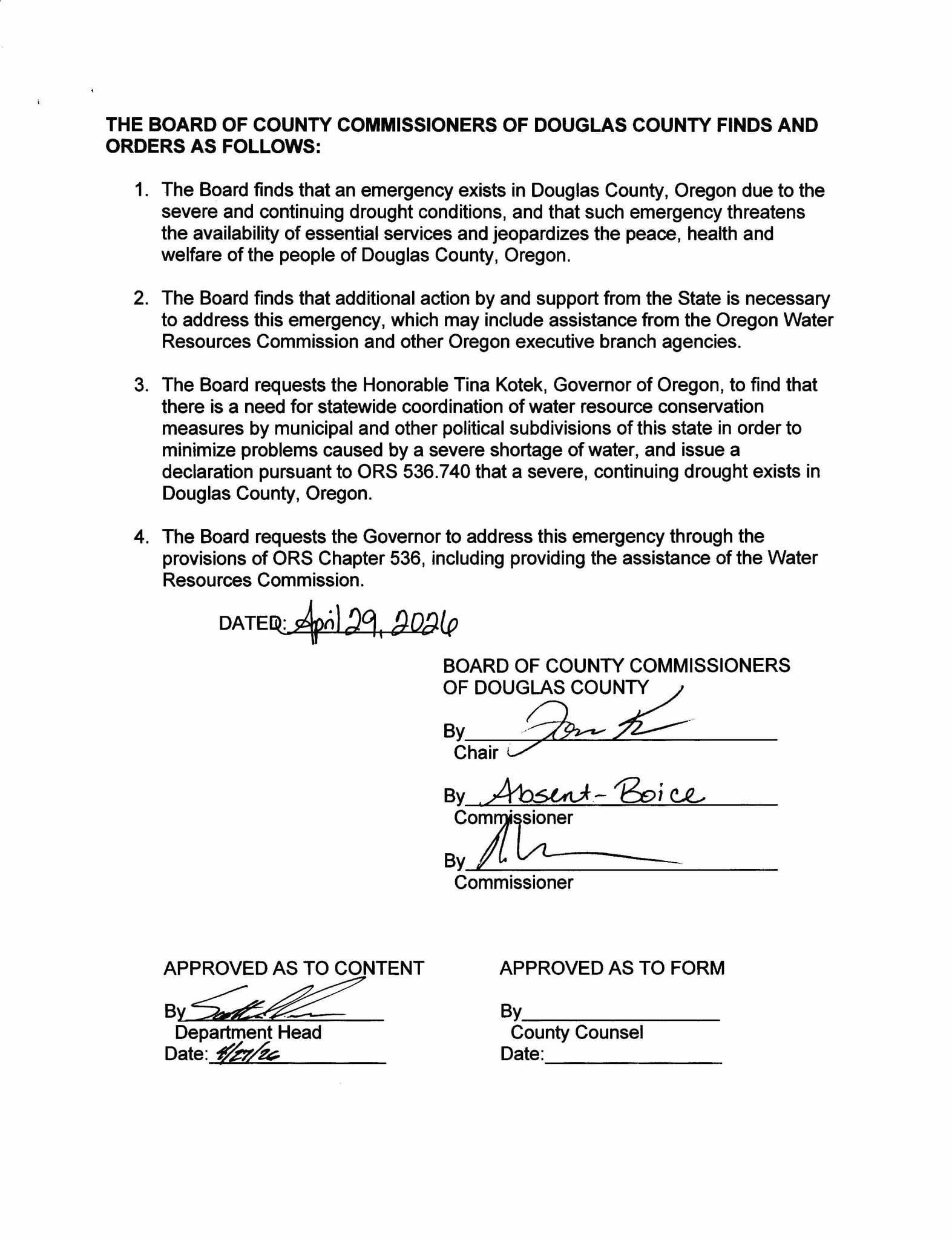
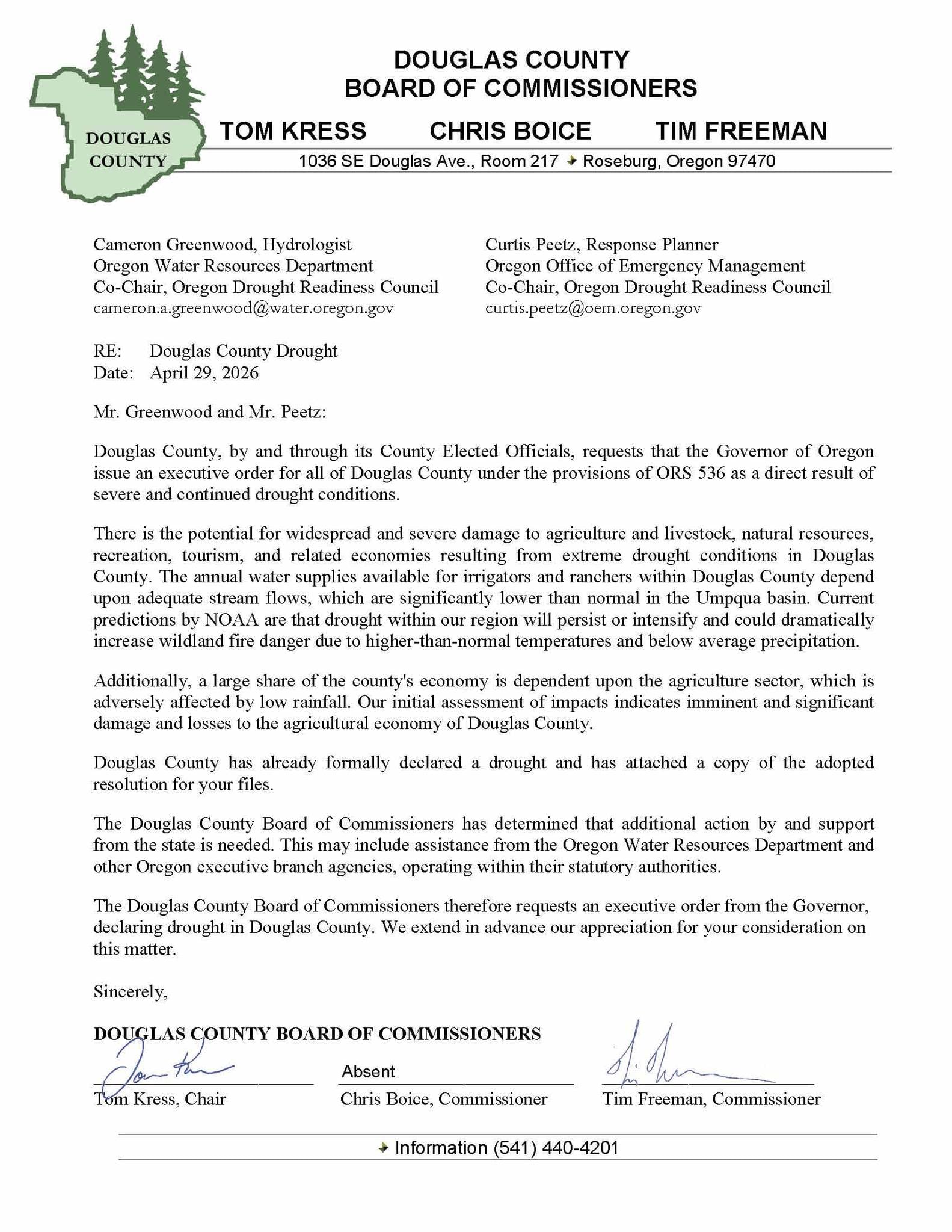
The county’s order has been officially recorded, and Douglas County has submitted the signed order and an urgent request letter to the governor, asking for a state Emergency Drought Declaration for Douglas County under ORS 526.740.
If approved by the governor, the state declaration would allow more flexibility in water management and authorize state agencies, including the Oregon Water Resources Commission, to expedite water management tools for users who may not otherwise have access.
County officials said the order is the result of severe and continued drought conditions that threaten essential services and jeopardize the peace, health, and welfare of Douglas County residents.
The order cites several major concerns:
- Agricultural, livestock, forest products industries, and related businesses are experiencing economic hardship and potential losses from extreme weather conditions.
- Feed and pasture production may decline, with a shorter growing season and reduced water supplies for agricultural, livestock, and vineyard producers.
- Surface water supplies are expected to be limited, affecting irrigators, industrial users, and domestic users.
- Groundwater resources may also be affected, with reduced recharge leading to lower spring and well water supplies for household use.
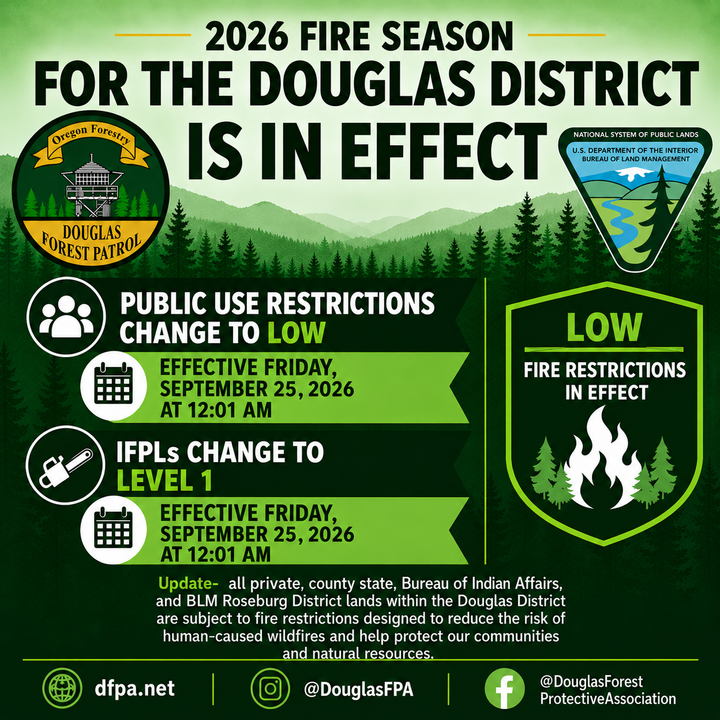
- Wildfire danger is increasing, with multi-year drought conditions contributing to lower fuel moisture and an earlier onset of fire danger.
According to the Oregon Water Resources Department Water Conditions Report cited in the order, Douglas County streamflows were 58% of average for March 2026. The report also stated that soil moisture levels were very low and that snow water equivalent in the Rogue-Umpqua Basin was 14% of the historical median.
The order also cited the U.S. Drought Monitor for Oregon, which showed that, as of March 17, 2026, most of Douglas County was already in Moderate Drought.
County officials said dry soil and low streamflows mean basin water managers expect to regulate surface water right users much earlier than normal and to older priority dates than usual.
The most recent three-month outlook from NOAA’s Climate Prediction Center also indicates that drought conditions are likely to continue, with probabilities favoring above-normal temperatures and below-average precipitation.
The county said the drought declaration has not resulted in any residential water use restrictions. However, officials said it serves as a reminder that water conservation is important and that fire danger is already high in Douglas County.

Comments ()