
Common Carp Found In Cooper Creek Reservoir Near Sutherlin
ODFW biologists are monitoring Cooper Creek Reservoir near Sutherlin after confirming illegally introduced common carp. The agency removed 14 adult carp and is asking anglers to report any catches.
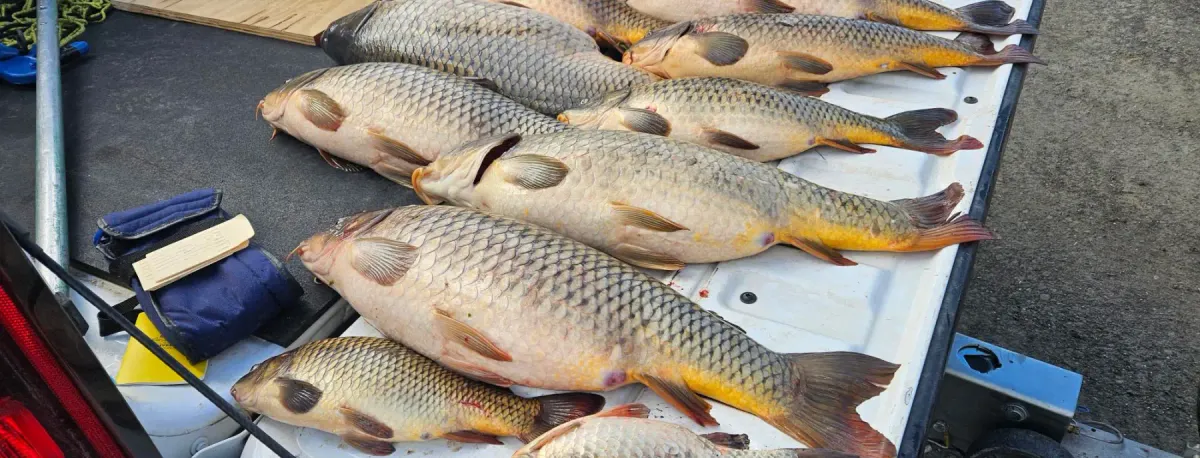
ROSEBURG, Ore. — Oregon Department of Fish and Wildlife biologists are monitoring Cooper Creek Reservoir near Sutherlin after confirming that common carp have been illegally introduced into the waterbody.
ODFW said the agency verified an angler’s report last week by using electrofishing equipment in the reservoir. During that effort, biologists removed 14 adult carp. Most were pregnant females, with estimated ages ranging from about two to eight years old.
The discovery has raised concerns because common carp can spread and affect aquatic ecosystems. The species is native to Europe and Asia and can survive in calm waters, including areas of the North Umpqua River and mainstem Umpqua River if they are able to move beyond the reservoir.

According to ODFW, adult female carp can produce up to 300,000 eggs during a single spawn, and warmer water can lead to additional spawning events.
Biologists said carp can also affect water quality and habitat by uprooting aquatic plants, increasing turbidity, and changing vegetation and food webs that support native fish and other aquatic life.
Evan Leonetti, ODFW’s Umpqua Fish District biologist, said the agency will continue monitoring Cooper Creek Reservoir through electrofishing and will remove and dispose of carp that are found. ODFW has also notified the Sutherlin Water District, which manages the reservoir, and is coordinating with others to determine next steps.
ODFW is asking anglers who catch carp in Cooper Creek Reservoir or nearby waters to report the location, fish size, and a photo if possible.
Reports can be sent to Leonetti at evan.leonetti@odfw.oregon.gov or by calling 541-440-3353.
Anglers are encouraged not to return live carp to the water. ODFW said common carp are classified as non-game fish in Oregon, meaning there is no harvest limit, and it is legal to dispose of them.



Comments ()